fish · Loricariidae
Zebra pleco
Hypancistrus zebra
Wild range: Amazon Basin (South America)
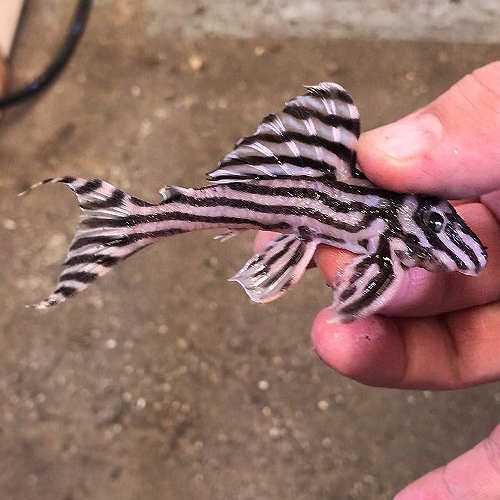
At a glance: Zebra pleco care
Compiled reference information. Review the care notes and original sources below.
What temperature is listed for Zebra pleco?
The compiled profile lists 24.0–31.0 °C for Zebra pleco (Hypancistrus zebra). Check the original sources below for context and differing recommendations.
What tank size is listed for Zebra pleco?
The profile lists a minimum tank volume of 26.4 US gallons (100.0 liters). Volume alone does not establish suitability; consider dimensions, group size and other inhabitants alongside the full care notes.
What pH is listed for Zebra pleco?
The compiled profile lists a pH of 6.4–7.5. Review the cited care sources alongside the other water parameters in this profile.
Natural habitat
Zebra Plecos inhabit the clear, sandy bottoms of the Amazon River and its tributaries, preferring slow-moving waters with ample hiding spots among rocks and driftwood.
Where they are found
The species is found exclusively in the Rio Xingu, a clear-water tributary of the Amazon River. The current ecological threats such as infrastructure projects like the Belo Monte Dam pose significant risks to their natural habitat, underscoring their vulnerability.
Aquarium care
Zebra Plecos require a carefully curated biotope that mimics their natural habitat. They thrive in environments with strong water movement and aeration, which is crucial for their health. Regular water changes and high filtration are necessary to maintain optimal living conditions.
Feeding
Zebra Plecos are not picky eaters, enjoying a diet consisting mostly of algae wafers, sinking pellets, and occasional vegetables. Variating their diet helps maintain their health and happiness.
Compatibility
Zebra Plecos are best housed alone in a single-species tank due to their shy nature and territorial tendencies. If kept with other fish, they should only be housed with peaceful species that thrive in similar conditions, ideally those that occupy the upper water levels. Other bottom-dwelling species should generally be avoided.
Breeding
Breeding occurs in caves where a dominant male will attract a female. The female will lay eggs that the male fertilizes and guards. Optimal conditions for breeding include maintaining a temperature of approximately 29.8°C, and it is important to have caves that are oriented perpendicular to the water flow.
Sources
Compiled from multiple independent care sheets — not copied from a single site.