fish · Cyprinidae
Zebra danio
Danio rerio
Wild range: South Asia (Asia)
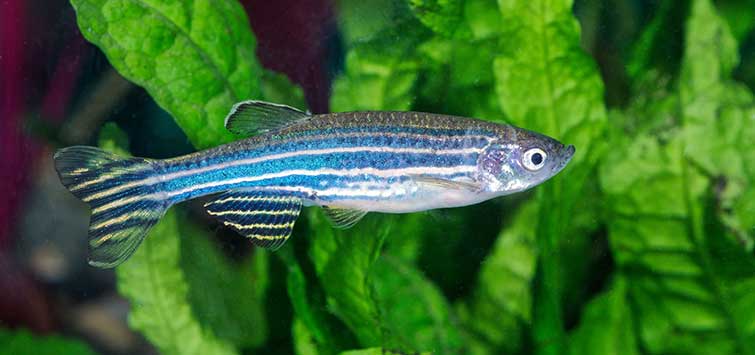
At a glance: Zebra danio care
Compiled reference information. Review the care notes and original sources below.
What temperature is listed for Zebra danio?
The compiled profile lists 18.0–28.0 °C for Zebra danio (Danio rerio). Check the original sources below for context and differing recommendations.
What tank size is listed for Zebra danio?
The profile lists a minimum tank volume of 10.0 US gallons (40.0 liters). Volume alone does not establish suitability; consider dimensions, group size and other inhabitants alongside the full care notes.
What pH is listed for Zebra danio?
The compiled profile lists a pH of 6.5–8.0. Review the cited care sources alongside the other water parameters in this profile.
Natural habitat
Zebra Danios are native to freshwater streams and rivers in India, Nepal, and Bangladesh, thriving in moderately fast-moving waters. They prefer slightly alkaline water with well-oxygenated conditions.
Where they are found
They are widely distributed across South and Southeast Asia, particularly in the river systems of India and surrounding countries.
Aquarium care
Zebra Danios are hardy fish that require a spacious tank (at least 95 liters for a group of six) with quality filtration. Maintaining a stable temperature of 21-27 °C and a pH range of 6.5-7.2 is crucial. Ensure they are kept in groups to reduce stress and prevent aggression. Regular water changes, at least 10-15% weekly, are necessary to maintain water quality.
Feeding
Zebra Danios are omnivores and can be fed a varied diet, including high-quality flake foods, frozen or live foods like brine shrimp, and finely crushed flakes suitable for fry.
Compatibility
Zebra Danios are peaceful and community-friendly. They do well with other small, non-aggressive fish such as Tetras, Corydoras, and Guppies. Avoid housing them with aggressive species that may stress them or lead to fin-nipping.
Breeding
They are egg-layers and can be bred in a separate breeding tank with spawning mops or fine-leaved plants. Optimal breeding conditions include slightly cooler water and gentle flow.
Sources
Compiled from multiple independent care sheets — not copied from a single site.