Catalog / invertebrates / Zebra crayfish
invertebrate · Parastacidae
Zebra crayfish
Cherax peknyi
Wild range: New Guinea (Oceania)
At a glance: Zebra crayfish care
Compiled reference information. Review the care notes and original sources below.
What temperature is listed for Zebra crayfish?
The compiled profile lists 18.0–29.0 °C for Zebra crayfish (Cherax peknyi). Check the original sources below for context and differing recommendations.
What tank size is listed for Zebra crayfish?
The profile lists a minimum tank volume of 30.0 US gallons (113.6 liters). Volume alone does not establish suitability; consider dimensions, group size and other inhabitants alongside the full care notes.
What pH is listed for Zebra crayfish?
The compiled profile lists a pH of 5.0–8.0. Review the cited care sources alongside the other water parameters in this profile.
Natural habitat
Cherax peknyi blue Claw is an omnivorous crustacean that lives naturally in freshwater environments and primarily inhabits the bottom of rivers or lakes. This species is nocturnal and engages in activities such as digging into the substrate and seeking shelter among roots and rocks.
Where they are found
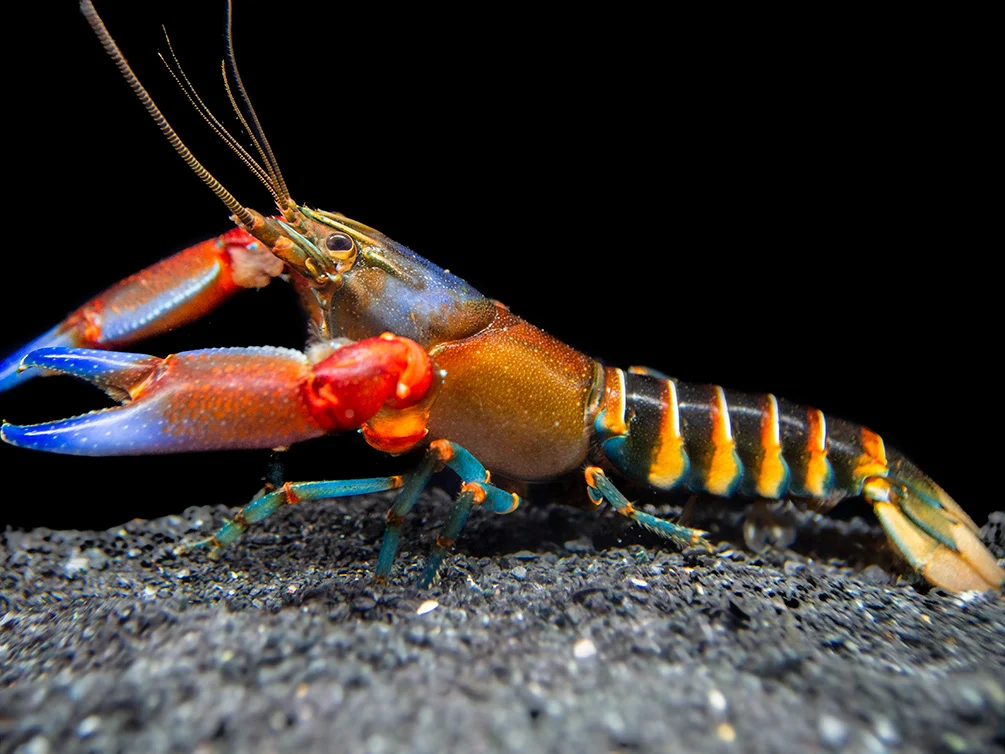
First reported in the year 2008, these crayfish are known for their stunning hues, including cerulean blue and sunny orange, which enhance their appeal in aquarium settings.
Aquarium care
For successful aquarium maintenance, provide a minimum tank size of 450 liters with plenty of hiding spaces like caves and sturdy plants. Regular water changes and monitoring of water parameters are essential to ensure a healthy environment.
Feeding
Cherax peknyi blue Claw is an omnivore and should be fed a varied diet that can include sinking pellets, vegetables, and live or frozen foods. Feed in moderation, ensuring that any uneaten food is promptly removed to maintain water quality.
Compatibility
These crayfish are semi-aggressive and are best kept with other larger species that can handle their temperament. Smaller fish and invertebrates may be at risk of being eaten.
Breeding
They breed sexually, and breeding should be monitored closely, especially during the molting phase due to vulnerability. It is recommended to provide separate tanks if breeding in community setups.
Sources
Compiled from multiple independent care sheets — not copied from a single site.