invertebrate · Ampullariidae
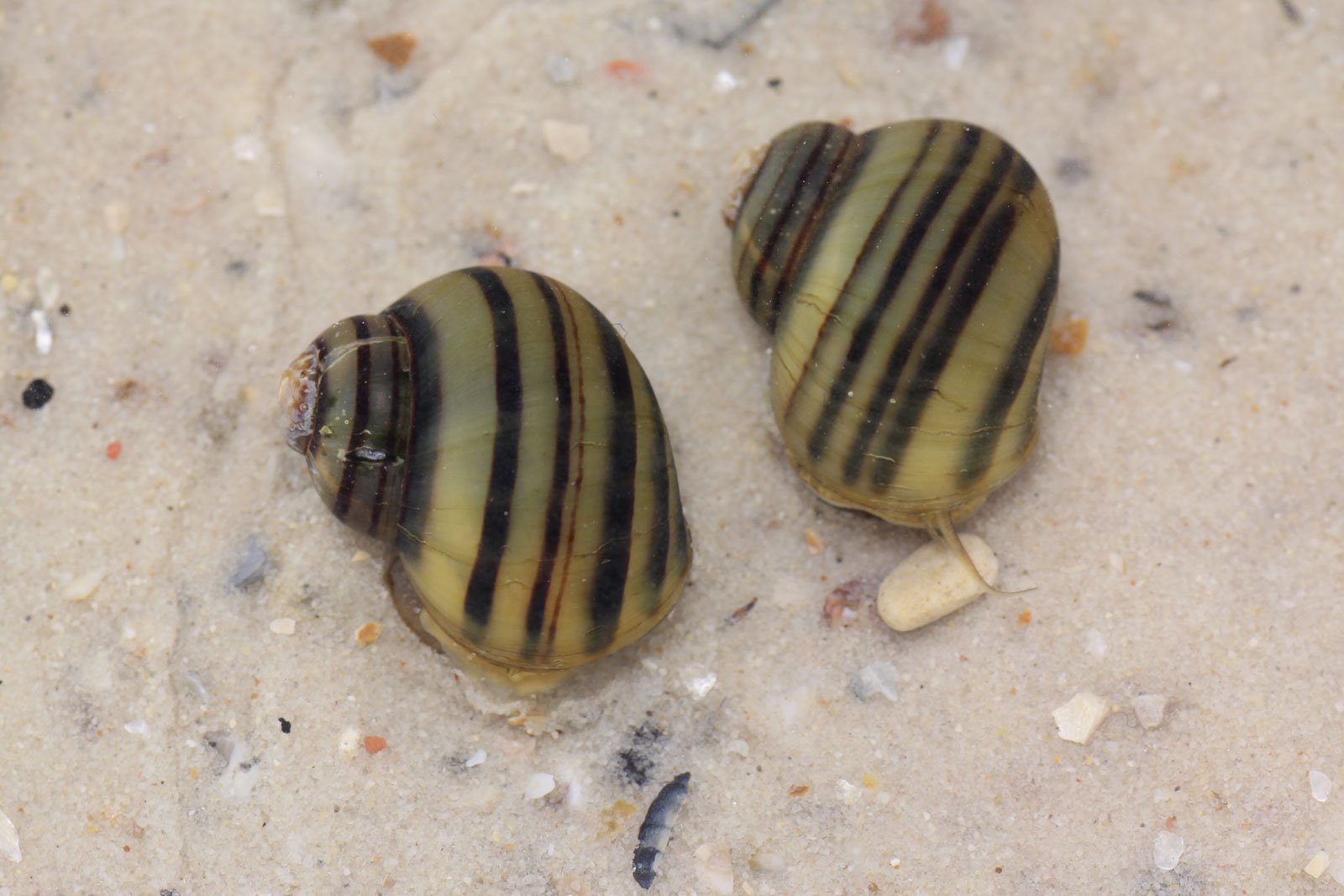
Zebra apple snail
Asolene spixii
Wild range: Southeast Brazil (South America)
At a glance: Zebra apple snail care
Compiled reference information. Review the care notes and original sources below.
What temperature is listed for Zebra apple snail?
The compiled profile lists 10.0–28.0 °C for Zebra apple snail (Asolene spixii). Check the original sources below for context and differing recommendations.
What tank size is listed for Zebra apple snail?
The profile lists a minimum tank volume of 11.0 US gallons (40.0 liters). Volume alone does not establish suitability; consider dimensions, group size and other inhabitants alongside the full care notes.
What pH is listed for Zebra apple snail?
The compiled profile lists a pH of 6.0–8.5. Review the cited care sources alongside the other water parameters in this profile.
Natural habitat
Spixi Snails are found in subtropical freshwater environments in southeastern Brazil, thriving in soft substrates and a variety of water conditions.
Where they are found
This species is primarily found in Brazil, where it enjoys warm temperatures and a stable environment in its natural habitat.
Aquarium care
Keep zebra apple snails in a covered tank with gentle flow, good filtration and stable, moderately hard water to protect the shell. Offer soft vegetables and sinking foods as well as algae, because plants and algae alone will not sustain them.
Feeding
The diet of Spixi Snails consists of blanched vegetables like lettuce, cucumber, and spinach, alongside fish food in the form of flakes, granules, or tablets. For added calcium, tofu can be offered every four to eight weeks but should be monitored to prevent water contamination.
Compatibility
Peaceful toward fish and other invertebrates. Avoid snail-eating fish such as puffers and large loaches, and fish that nip at snail tentacles.
Breeding
These snails reproduce by laying egg clusters above the water line. It takes 2-3 weeks for the eggs to hatch. It's important to protect the egg clutches from potential predators in the aquarium.
Sources
Compiled from multiple independent care sheets — not copied from a single site.