fish · Cobitidae
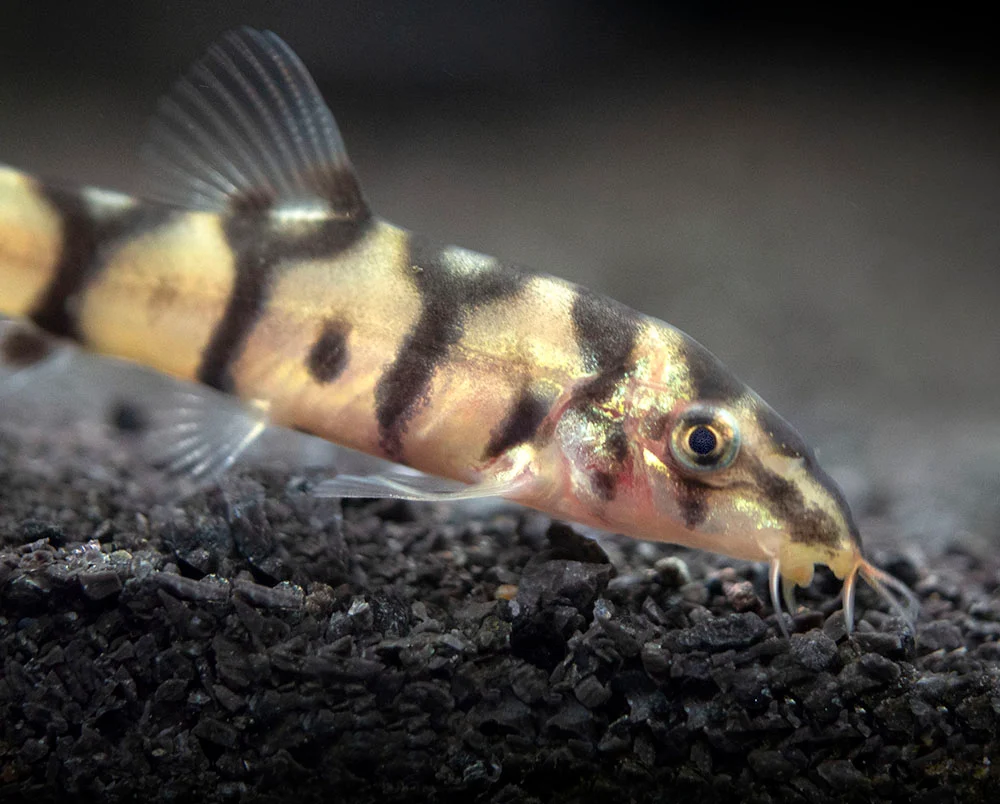
Yoyo loach
Botia almorhae
Wild range: South Asia (Asia)
At a glance: Yoyo loach care
Compiled reference information. Review the care notes and original sources below.
What temperature is listed for Yoyo loach?
The compiled profile lists 24.0–30.0 °C for Yoyo loach (Botia almorhae). Check the original sources below for context and differing recommendations.
What tank size is listed for Yoyo loach?
The profile lists a minimum tank volume of 20.0 US gallons (75.0 liters). Volume alone does not establish suitability; consider dimensions, group size and other inhabitants alongside the full care notes.
What pH is listed for Yoyo loach?
The compiled profile lists a pH of 6.5–7.5. Review the cited care sources alongside the other water parameters in this profile.
Natural habitat
Yoyo loaches are native to rivers in South Asia, particularly in Pakistan, India, Nepal, and Bangladesh. They thrive in environments with soft, slightly acidic water, preferring well-oxygenated conditions with moderate flow that mimics their natural habitat.
Where they are found
Their natural range includes the rivers and streams of India, Pakistan, and Nepal.
Aquarium care
Yoyo loaches require a spacious tank with a minimum size of 75 liters (20 gallons). They are bottom-dwellers; hence, a longer tank is preferred over a taller one. A tightly-fitting lid is necessary as they are habitual jumpers. Regular 30% water changes are crucial to maintain water quality, alongside good filtration to create enough water movement for oxygenation.
Feeding
Yoyo loaches have a varied diet that can include sinking wafers, blood worms, and brine shrimp, in addition to snails. It's crucial to monitor their feeding to avoid overfeeding, which can lead to health issues due to their greedy nature.
Compatibility
Yoyo loaches are generally peaceful and thrive in community tanks. However, it's essential to avoid keeping them with shrimp, snails, or crabs due to their predatory tendencies. They exhibit mild aggression towards long-finned, slow-swimming fish like bettas. Ideal tankmates should align with their sociable disposition, preferably in groups of six or more to establish a pecking order.
Breeding
Breeding can be complex and requires soft, acidic water along with increased water flow; creating suitable conditions is crucial for success.
Sources
Compiled from multiple independent care sheets — not copied from a single site.