invertebrate · Pachychilidae
Yellow rabbit snail
Tylomelania towutensis
Wild range: Southeast Asia (Asia)
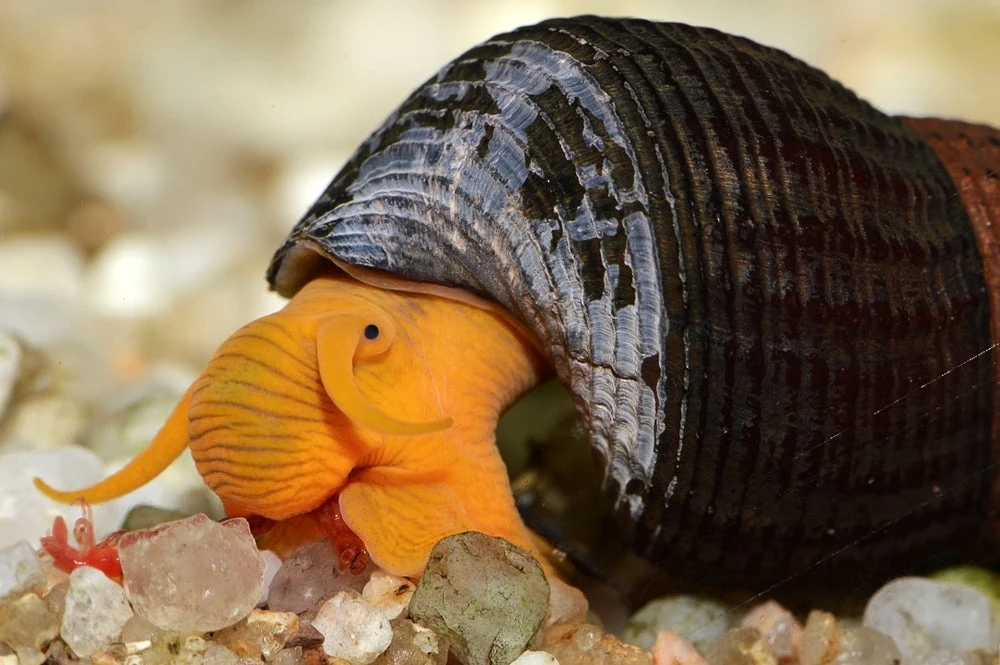
At a glance: Yellow rabbit snail care
Compiled reference information. Review the care notes and original sources below.
What temperature is listed for Yellow rabbit snail?
The compiled profile lists 20.0–29.4 °C for Yellow rabbit snail (Tylomelania towutensis). Check the original sources below for context and differing recommendations.
What tank size is listed for Yellow rabbit snail?
The profile lists a minimum tank volume of 10.0 US gallons (37.9 liters). Volume alone does not establish suitability; consider dimensions, group size and other inhabitants alongside the full care notes.
What pH is listed for Yellow rabbit snail?
The compiled profile lists a pH of 6.5–8.5. Review the cited care sources alongside the other water parameters in this profile.
Natural habitat
Rabbit Snails are predominantly found in freshwater lakes on Sulawesi Island, Indonesia. They thrive in environments with hard water and prefer warmer temperatures. Ample minerals, particularly calcium, are important for their shell health.
Where they are found
This species is native to the Southeastern United States, particularly abundant in Florida. They have adapted to various freshwater habitats, enjoying moderate flow and stable temperatures.
Aquarium care
Provide them with a well-cycled tank, maintaining temperature and pH levels in line with their natural habitat. A sandy substrate is preferable, along with ample hiding spots while keeping decor minimal to allow movement.
Feeding
Rabbit Snails are detritivores, consuming organic waste and algae. It's beneficial to supplement their diet with sinking pellets, algae wafers, and fresh vegetables like zucchini and spinach. They typically do not harm live plants but may enjoy decomposing plant matter.
Compatibility
They are peaceful and can coexist with various species that appreciate similar water conditions. Compatible tankmates include shrimp and tranquil community fish like guppies and mollies.
Breeding
Like other Tylomelania, it is ovoviviparous. The female broods embryos in a pouch and releases fully formed juvenile snails, often one at a time, in a short-lived egg capsule. Breeding is slow, so colonies grow gradually in warm, stable water.
Sources
Compiled from multiple independent care sheets — not copied from a single site.