Catalog / invertebrates / Yellow gold Sulawesi shrimp
invertebrate · Atyidae
Yellow gold Sulawesi shrimp
Caridina spinata
Wild range: Southeast Asia (Asia)
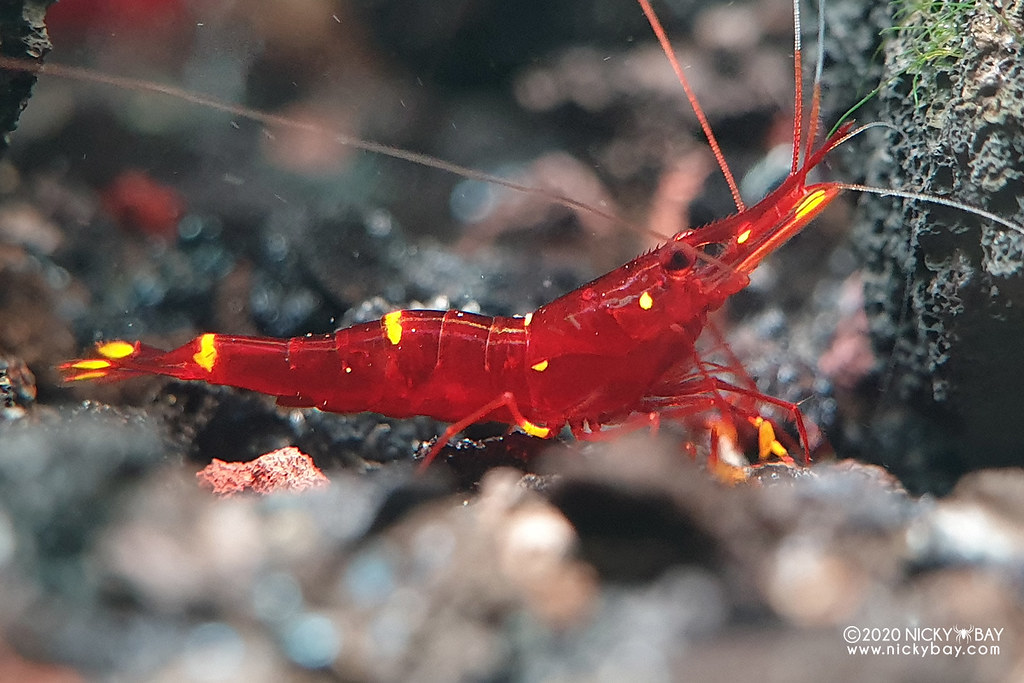
At a glance: Yellow gold Sulawesi shrimp care
Compiled reference information. Review the care notes and original sources below.
What temperature is listed for Yellow gold Sulawesi shrimp?
The compiled profile lists 25.0–31.0 °C for Yellow gold Sulawesi shrimp (Caridina spinata). Check the original sources below for context and differing recommendations.
What tank size is listed for Yellow gold Sulawesi shrimp?
The profile lists a minimum tank volume of 5.0 US gallons (20.0 liters). Volume alone does not establish suitability; consider dimensions, group size and other inhabitants alongside the full care notes.
What pH is listed for Yellow gold Sulawesi shrimp?
The compiled profile lists a pH of 7.5–8.5. Review the cited care sources alongside the other water parameters in this profile.
Natural habitat
Caridina spinata thrives in warm, shallow waters with high mineral content, typically found among rocks and sand in its native lakes and river systems. These shrimp are adapted to stable conditions, preferring environments with few plants and plenty of hiding spots.
Where they are found
Sulawesi shrimp inhabit primarily the Malili system and Lake Poso, where species have developed distinct adaptations over millions of years, resulting in a rich variety of coloration and patterns.
Aquarium care
To ensure the well-being of Sulawesi Yellow Nose Shrimp, they should be kept in groups of at least ten individuals within a well-established aquarium. A soft, acidic substrate is recommended for moulting, along with stable water parameters to maintain their health.
Feeding
The diet of Yellow Cheek Sulawesi Shrimp should consist of high-quality algae-based foods, such as crushed veggie sticks or flake food moderately given 1-2 times a week. It's important to not overfeed to maintain optimal water quality.
Compatibility
Sulawesi Yellow Nose Shrimp can be kept with other small and peaceful fish or shrimp species that have similar water requirements. Their peaceful temperament allows them to coexist well in a community tank.
Breeding
Breeding Sulawesi shrimp is challenging due to their fragility and specific environmental needs. Although they can reproduce in captivity, high mortality rates of juveniles are common. Successful breeding requires stable conditions and a rich biofilm for young shrimp to feed on.
Sources
Compiled from multiple independent care sheets — not copied from a single site.