fish · Characidae
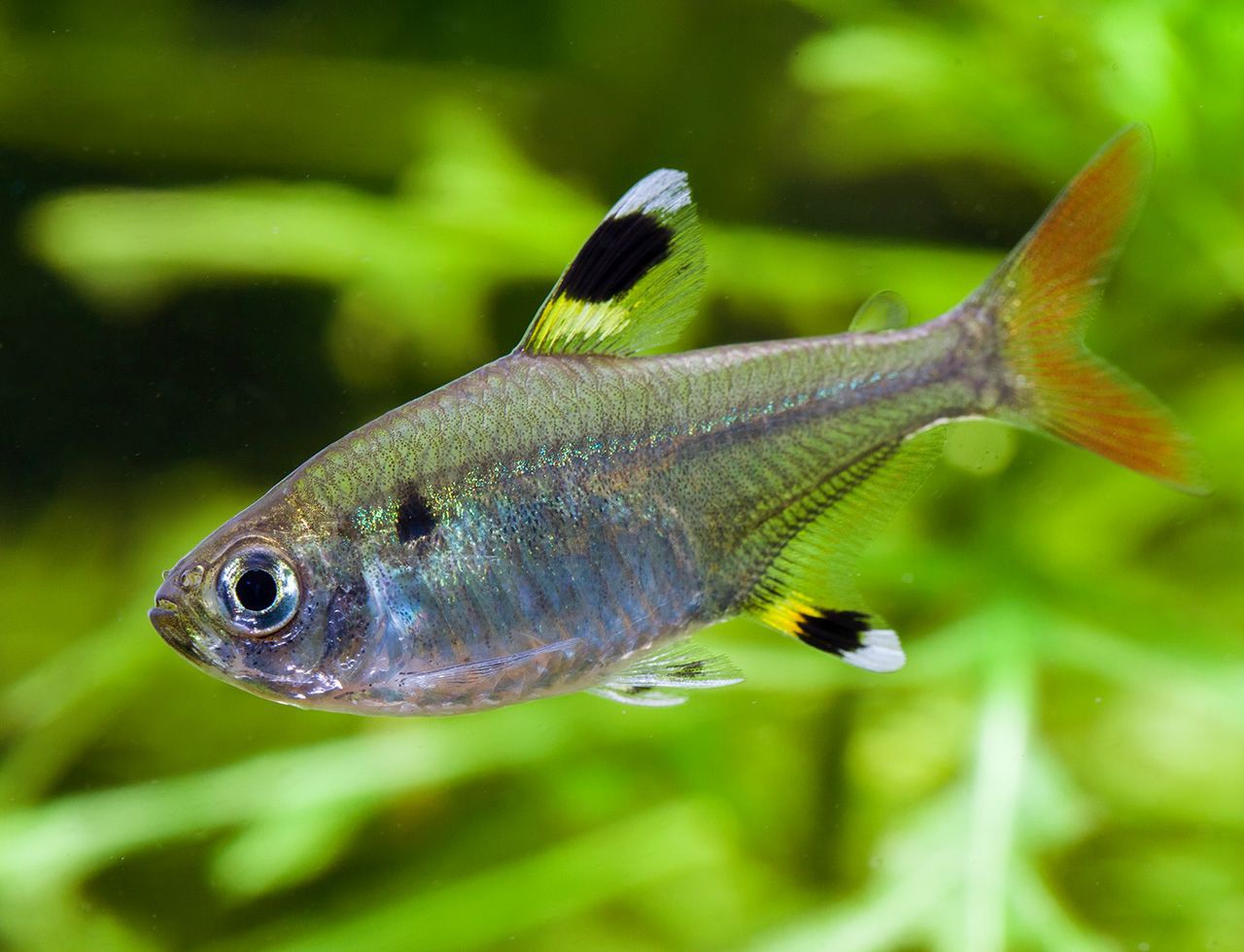
X-ray tetra
Pristella maxillaris
Wild range: Coastal rivers (South America)
At a glance: X-ray tetra care
Compiled reference information. Review the care notes and original sources below.
What temperature is listed for X-ray tetra?
The compiled profile lists 17.8–28.0 °C for X-ray tetra (Pristella maxillaris). Check the original sources below for context and differing recommendations.
What tank size is listed for X-ray tetra?
The profile lists a minimum tank volume of 10.0 US gallons (38.0 liters). Volume alone does not establish suitability; consider dimensions, group size and other inhabitants alongside the full care notes.
What pH is listed for X-ray tetra?
The compiled profile lists a pH of 5.8–8.5. Review the cited care sources alongside the other water parameters in this profile.
Natural habitat
Pristella tetras inhabit coastal rivers in South America, where they migrate with seasonal floods. They thrive in environments with a range of water hardness and conditions, showcasing their adaptability.
Where they are found
This species is notably adaptive, occupying both freshwater and brackish environments. They seasonally migrate to marshlands rich in flora for spawning, showcasing their variation in habitat preferences.
Aquarium care
To create an ideal environment for Golden X-Ray Tetras, provide a well-planted tank with open swimming areas. The aquarium should include gentle filtration to mimic their natural habitat, along with a sandy substrate and low lighting to enhance their color.
Feeding
As omnivores, pristella tetras enjoy a balanced diet of commercial flakes and occasional high-protein snacks such as brine shrimp, bloodworms, and insect larvae, with several feedings throughout the day.
Compatibility
Golden X-Ray Tetras are peaceful and do well in community tanks with other similarly-tempered species. While they can coexist with adult shrimps, care should be taken as they may consume shrimp fry if the opportunity arises.
Breeding
Breeding X-Ray Tetras requires a separate tank with vegetation or spawning mops. As they lay eggs during dawn, conditions should be kept slightly acidic and soft. Post-spawning, parents should be removed swiftly to protect the eggs.
Sources
Compiled from multiple independent care sheets — not copied from a single site.