Catalog / fish / Wine-red betta
fish · Osphronemidae
Wine-red betta
Betta coccina
Wild range: Southeast Asia (Asia)
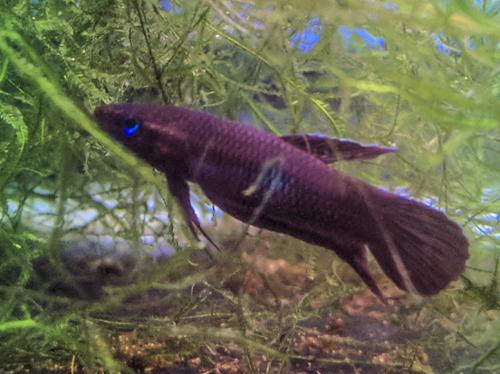
At a glance: Wine-red betta care
Compiled reference information. Review the care notes and original sources below.
What temperature is listed for Wine-red betta?
The compiled profile lists 22.0–30.0 °C for Wine-red betta (Betta coccina). Check the original sources below for context and differing recommendations.
What tank size is listed for Wine-red betta?
The profile lists a minimum tank volume of 10.8 US gallons (41.0 liters). Volume alone does not establish suitability; consider dimensions, group size and other inhabitants alongside the full care notes.
What pH is listed for Wine-red betta?
The compiled profile lists a pH of 3.5–8.0. Review the cited care sources alongside the other water parameters in this profile.
Natural habitat
Betta coccina is found in blackwater habitats of Southeast Asia. These fish prefer slow-moving waters with dense vegetation and leaf litter that provide both cover and breeding sites.
Where they are found
Distributed across Jambi and Riau provinces in Sumatra, Indonesia, and Johor in Peninsular Malaysia, the Scarlet Betta thrives mainly in shaded, slow-moving waters rich in decaying vegetation.
Aquarium care
Provide a well-planted environment with subdued lighting, a sandy substrate, and plenty of hiding places using driftwood and leaves. Ensure water parameters replicate their natural blackwater habitats, maintaining a pH around 6.0 with gentle water flow.
Feeding
Betta coccina is omnivorous and benefits from a varied diet that includes high-quality pellets, frozen, or live foods. Providing a mix of protein-rich and vegetable-based food will help maintain their health and vibrancy.
Compatibility
Generally peaceful, these fish are suitable for community tanks but should be kept with other small, non-aggressive species to reduce stress and aggression.
Breeding
Breeding Scarlet Bettas involves creating a secured environment with ample cover for females. They are bubble nesters, and spawning is characterized by a male wrapping around the female in a display of courtship. After fertilization, the male guards the nest until the fry can swim freely, which occurs a few days after hatching.
Sources
Compiled from multiple independent care sheets — not copied from a single site.