Catalog / plants / Weeping moss
plant
Weeping moss
Vesicularia ferriei
Wild range: Southeast Asia (Asia)
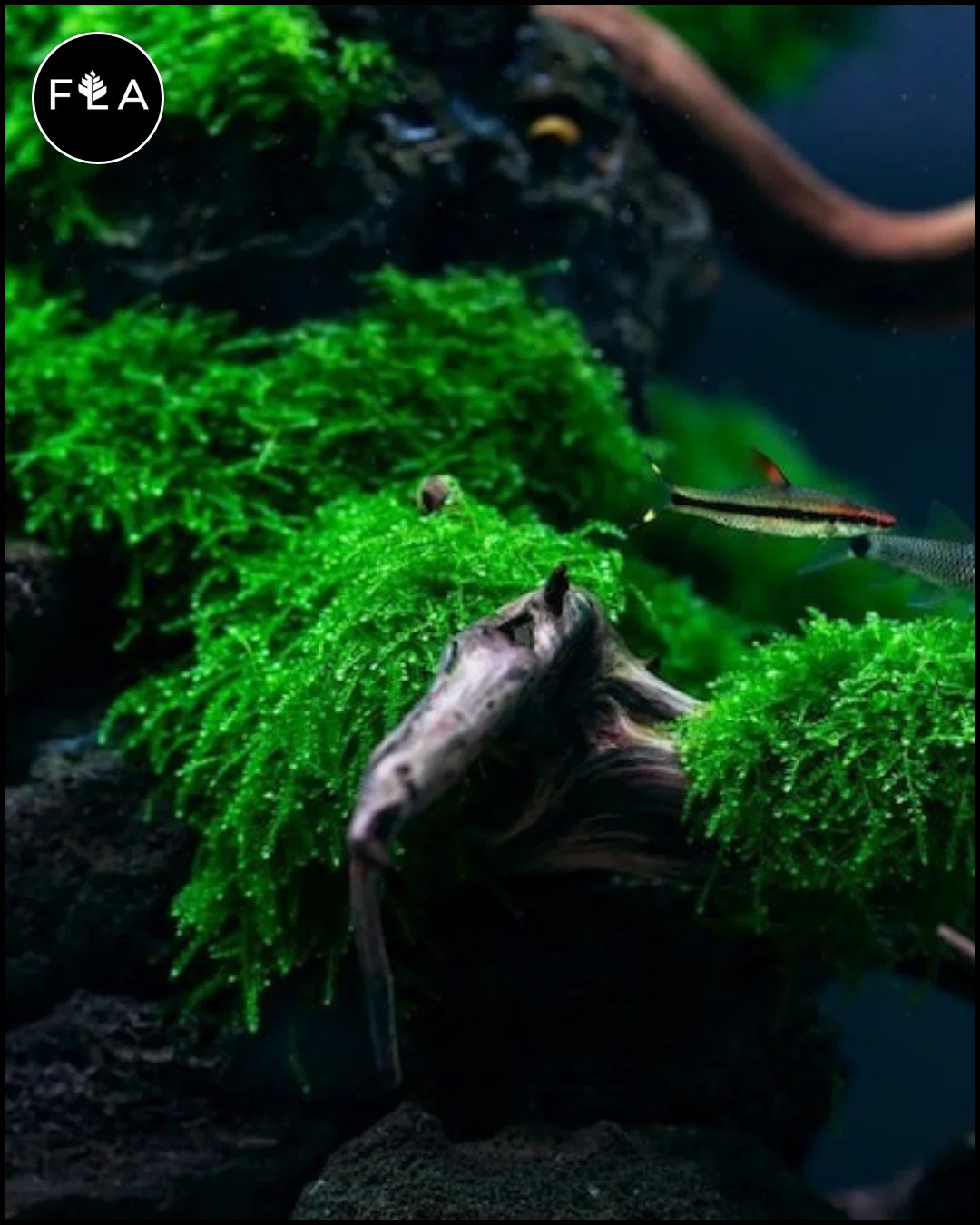
At a glance: Weeping moss care
Compiled reference information. Review the care notes and original sources below.
What temperature is listed for Weeping moss?
The compiled profile lists 20.0–28.0 °C for Weeping moss (Vesicularia ferriei). Check the original sources below for context and differing recommendations.
What pH is listed for Weeping moss?
The compiled profile lists a pH of 6.0–8.0. Review the cited care sources alongside the other water parameters in this profile.
Natural habitat
Weeping moss is native to Southeast Asia, thriving in freshwater streams, rivers, and wetlands. It prefers areas with high humidity and moderate to low light levels, often attaching itself to rocks, driftwood, or other surfaces, forming dense, cascading mats.
Where they are found
This moss is primarily native to the freshwater regions of Thailand, Vietnam, and Laos, where it grows in shaded areas of streams and ponds, contributing to the ecological balance by improving water quality and providing habitat for small aquatic life.
Aquarium care
Weeping Moss requires moderate light and does well without additional CO2. Regular trimming will encourage dense growth and maintain the desired aesthetic in your aquarium. Quarantine new plants to avoid introducing pests.
Feeding
The plant thrives best in soft water conditions, though it is tolerant of a range of water hardness levels. Regular water changes and monitoring of parameters enhance overall health and growth.
Compatibility
This moss is a safe addition to any community tank, providing cover for shy species without intruding on their territory.
Breeding
Breeding is facilitated in tanks where Weeping Moss is present, as it provides hiding spots for fry and small species. The moss serves as a surface for eggs to adhere to, thus supporting natural reproduction processes.
Sources
Compiled from multiple independent care sheets — not copied from a single site.