Catalog / fish / Venustus cichlid
fish · Cichlidae
Venustus cichlid
Nimbochromis venustus
Wild range: Lake Tanganyika (Africa)
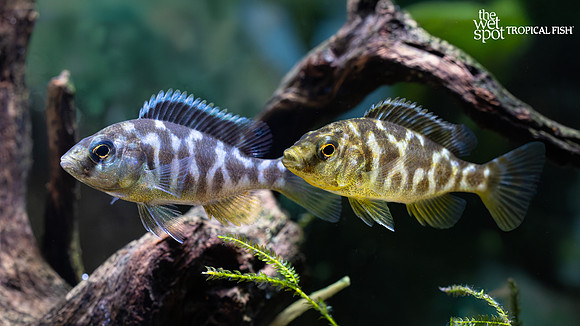
At a glance: Venustus cichlid care
Compiled reference information. Review the care notes and original sources below.
What temperature is listed for Venustus cichlid?
The compiled profile lists 24.0–28.0 °C for Venustus cichlid (Nimbochromis venustus). Check the original sources below for context and differing recommendations.
What tank size is listed for Venustus cichlid?
The profile lists a minimum tank volume of 79.0 US gallons (300.0 liters). Volume alone does not establish suitability; consider dimensions, group size and other inhabitants alongside the full care notes.
What pH is listed for Venustus cichlid?
The compiled profile lists a pH of 7.5–8.5. Review the cited care sources alongside the other water parameters in this profile.
Natural habitat
The Venustus Cichlid is native to the rocky substrates of Lake Tanganyika, where it exhibits unique behaviors, primarily searching for food among the rocks and sand. This environment influences its dietary and territorial behaviors.
Where they are found
Found predominantly in Lake Tanganyika, the Venustus Cichlid thrives in clear, warm waters rich in aquatic life, showcasing its adaptive nature to the diverse habitats within the lake.
Aquarium care
To keep Venustus Cichlids healthy, it's crucial to maintain stable water parameters and provide ample hiding spaces using rocks and caves. Regular water changes and a well-filtered tank are essential to prevent any water quality issues.
Feeding
Feed Venustus Cichlids a varied diet consisting of high-quality pellets, live food, and vegetable matter. This balanced diet promotes their health and vibrancy, aiding in their natural growth and behavior patterns.
Compatibility
Venustus Cichlids can be semi-aggressive and may not be suitable for peaceful community tanks. They are best kept with other robust species that are equally territorial and can manage their temperament.
Breeding
Breeding requires a separate breeding tank equipped with optimal water parameters. The female lays eggs, which are kept in her mouth for protection until they hatch. Ensure minimal disturbances during this period to foster successful breeding.
Sources
Compiled from multiple independent care sheets — not copied from a single site.