Catalog / plants / Grass-leaved bladderwort
plant · Lentibulariaceae
Grass-leaved bladderwort
Utricularia graminifolia
Wild range: Southeast Asia (Asia)
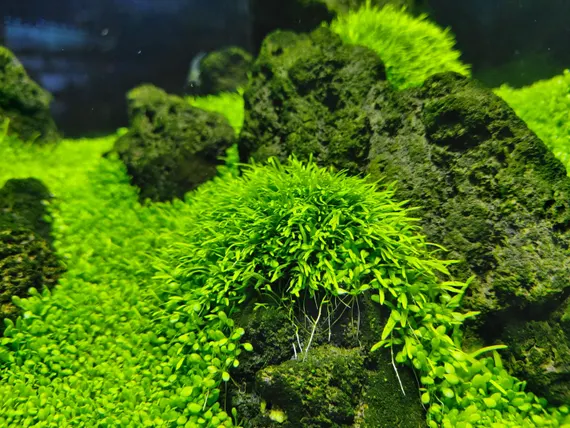
At a glance: Grass-leaved bladderwort care
Compiled reference information. Review the care notes and original sources below.
What temperature is listed for Grass-leaved bladderwort?
The compiled profile lists 16.0–28.0 °C for Grass-leaved bladderwort (Utricularia graminifolia). Check the original sources below for context and differing recommendations.
What tank size is listed for Grass-leaved bladderwort?
The profile lists a minimum tank volume of 2.6 US gallons (10.0 liters). Volume alone does not establish suitability; consider dimensions, group size and other inhabitants alongside the full care notes.
What pH is listed for Grass-leaved bladderwort?
The compiled profile lists a pH of 5.0–7.5. Review the cited care sources alongside the other water parameters in this profile.
Natural habitat
Utricularia graminifolia thrives in soft, slightly acidic waters, typically found in shallow regions of tropical freshwater systems.
Where they are found
This species prefers areas that feature wet soils and is usually found at altitudes up to 2000 meters, demonstrating a preference for conditions where water levels fluctuate.
Aquarium care
For optimal care, maintain stable water parameters and provide high lighting along with CO2 injection. Frequent water changes using soft or remineralized water can enhance growth and prevent die-off. Regular trimming is recommended to maintain density and health of the plant.
Feeding
This plant is carnivorous, utilizing its specialized structures to capture small detritivores, thus enhancing nutrient uptake. A balanced fertilizer may enhance its growth when cultured in aquariums.
Compatibility
This species is generally safe in community tanks and can coexist with many freshwater species; however, avoid planting alongside aggressive species that might uproot it. Best suited for setups where water parameters can be consistently maintained.
Breeding
Breeding is done through runners, which can be monitored and encouraged through proper care, maximizing their growth potential.
Sources
Compiled from multiple independent care sheets — not copied from a single site.