fish · Loricariidae
Twig catfish
Farlowella acus
Wild range: Central and South America (South America)
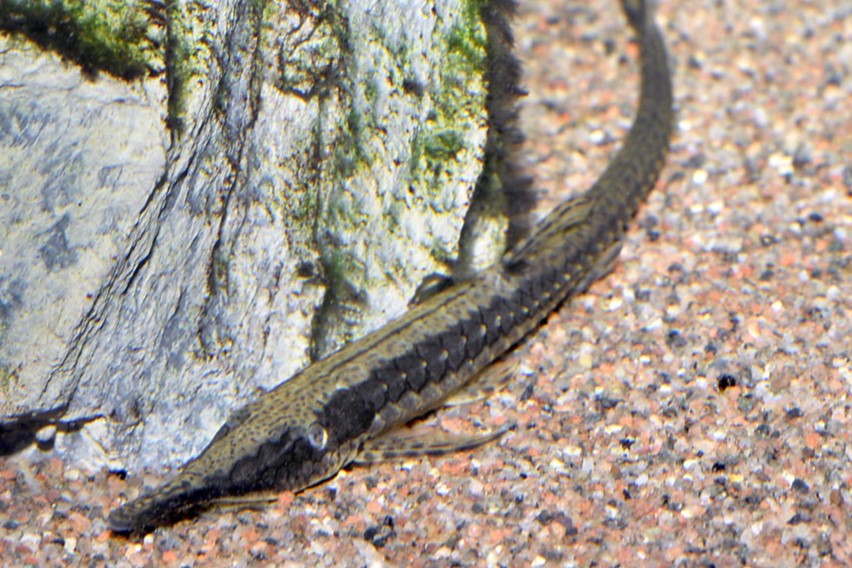
At a glance: Twig catfish care
Compiled reference information. Review the care notes and original sources below.
What temperature is listed for Twig catfish?
The compiled profile lists 21.1–27.0 °C for Twig catfish (Farlowella acus). Check the original sources below for context and differing recommendations.
What tank size is listed for Twig catfish?
The profile lists a minimum tank volume of 30.0 US gallons (113.6 liters). Volume alone does not establish suitability; consider dimensions, group size and other inhabitants alongside the full care notes.
What pH is listed for Twig catfish?
The compiled profile lists a pH of 6.0–7.5. Review the cited care sources alongside the other water parameters in this profile.
Natural habitat
The Royal Farlowella is primarily found in the fast-flowing rivers of Central and South America. This species thrives in well-oxygenated waters and prefers slightly cooler temperatures. The natural habitat involves a substrate that consists of gravel along with ample driftwood and plants to mimic its native environment.
Where they are found
Native to the Orinoco River basin, the Twig Catfish thrives in soft and slightly acidic waters.
Aquarium care
Maintain a stable environment with a strong filtration system to replicate its natural habitat. Regular water changes are vital to keep ammonia and nitrite levels low. Use driftwood and crianthal plants to offer hiding spaces for this species, as they are nocturnal.
Feeding
A primarily vegetarian species, Twig Catfish require algae wafers and tablets complemented with vegetables like courgette and spinach. While they can consume meaty foods, a vegetable-based diet is crucial for their health.
Compatibility
Twig Catfish are peaceful and can coexist with small to medium-sized fish that thrive in soft water, like Corydoras and tetras. They should not be housed with aggressive species that might outcompete them for food.
Breeding
Breeding Royal Farlowella can be straightforward with proper conditions. A pair should be kept in a well-maintained tank with good water quality. They typically lay about 150 eggs on flat surfaces, requiring moderate water flow for optimal development.
Sources
Compiled from multiple independent care sheets — not copied from a single site.