Catalog / fish / Betta tussyae
fish · Osphronemidae
Betta tussyae
Betta tussyae
Wild range: Southeast Asia (Asia)
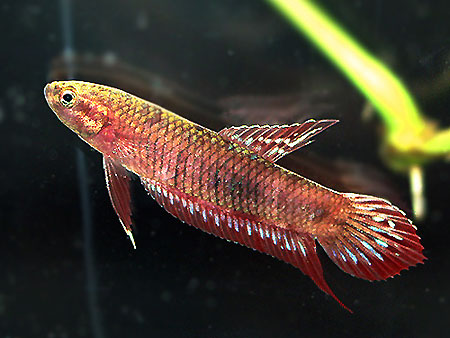
At a glance: Betta tussyae care
Compiled reference information. Review the care notes and original sources below.
What temperature is listed for Betta tussyae?
The compiled profile lists 24.0–30.0 °C for Betta tussyae (Betta tussyae). Check the original sources below for context and differing recommendations.
What tank size is listed for Betta tussyae?
The profile lists a minimum tank volume of 5.3 US gallons (20.0 liters). Volume alone does not establish suitability; consider dimensions, group size and other inhabitants alongside the full care notes.
What pH is listed for Betta tussyae?
The compiled profile lists a pH of 4.0–8.0. Review the cited care sources alongside the other water parameters in this profile.
Natural habitat
*Betta tussyae* is native to Malaysia, inhabiting small streams characterized by soft, acidic water with pH values between 4 and 5 and a low general hardness (GH 1-2). These habitats typically feature overhanging vegetation, providing cover and breeding sites for the fish.
Where they are found
The natural range of this species is limited to specific locations in Malaysia, where it inhabits shallow waters and prefers areas with plenty of vegetation.
Aquarium care
To maintain the health of Betta tussyae, provide a well-planted tank with hiding spots, moderate filtration, and stable water parameters. Regular water changes are essential to keep water quality at optimal levels.
Feeding
A varied diet consisting of live, frozen foods such as bloodworms, along with high-quality pellets, is ideal for *Betta tussyae*. They accept food readily and thrive on a mix of protein sources.
Compatibility
This species is generally peaceful and can coexist with other non-aggressive fish. However, avoid housing them with fin-nipping species or overly dominant fish that may provoke stress.
Breeding
Breeding is best achieved by providing a separate breeding tank with calm water conditions. The males build bubble nests and care for the fry, which should be fed infusoria until large enough for fry food.
Sources
Compiled from multiple independent care sheets — not copied from a single site.