Catalog / fish / Turquoise rainbowfish
fish · Melanotaeniidae
Turquoise rainbowfish
Melanotaenia lacustris
Wild range: Papua New Guinea (Oceania)
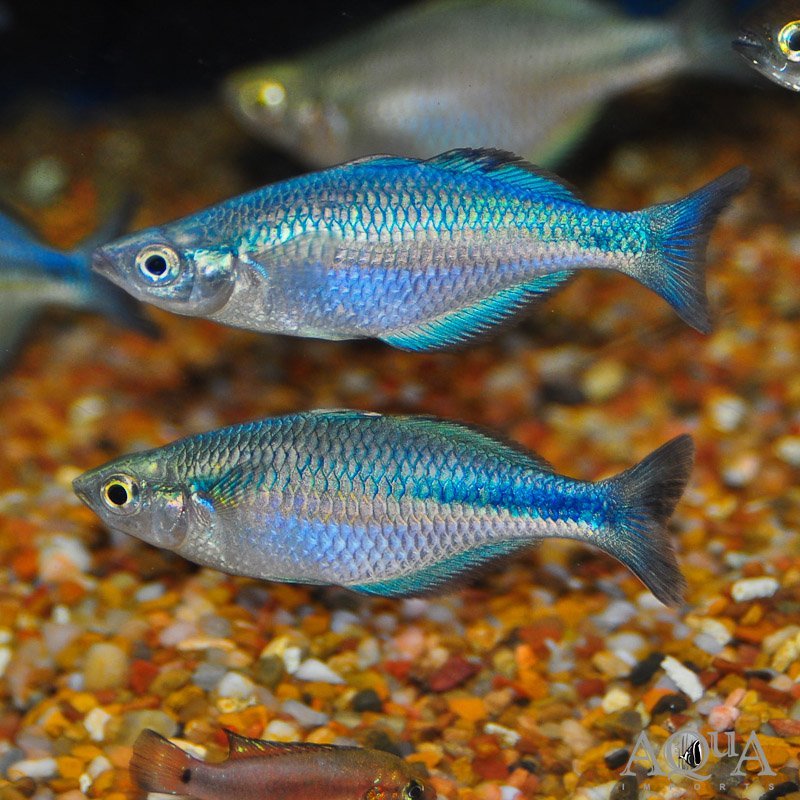
At a glance: Turquoise rainbowfish care
Compiled reference information. Review the care notes and original sources below.
What temperature is listed for Turquoise rainbowfish?
The compiled profile lists 21.0–28.0 °C for Turquoise rainbowfish (Melanotaenia lacustris). Check the original sources below for context and differing recommendations.
What tank size is listed for Turquoise rainbowfish?
The profile lists a minimum tank volume of 30.0 US gallons (113.6 liters). Volume alone does not establish suitability; consider dimensions, group size and other inhabitants alongside the full care notes.
What pH is listed for Turquoise rainbowfish?
The compiled profile lists a pH of 6.0–8.0. Review the cited care sources alongside the other water parameters in this profile.
Natural habitat
The Turquoise Rainbowfish is native to Lake Kutubu, situated in the Southern Highlands of Papua New Guinea. They typically inhabit open waters with dense plant cover, making swimming spaces crucial for their wellbeing.
Where they are found
Their distribution is limited to Lake Kutubu in the Southern Highlands of Papua New Guinea. Due to habitat alterations caused by human activities, their population is dwindling, causing their classification as Vulnerable on the IUCN Red List.
Aquarium care
Provide a minimum tank size of 30 gallons with ample swimming space and well-planted areas. Ensure a secure lid, as these fish are known to jump. Maintain stable water conditions free from ammonia and nitrite. Regular water changes are essential for their health and vibrant coloration.
Feeding
Turquoise Rainbowfish have a robust appetite and should be fed a varied diet that includes staple flake or micro-pellet foods, along with live or frozen options like brine shrimp and daphnia. Offer small portions two to three times daily to prevent overfeeding.
Compatibility
Turquoise Rainbows are gentle and can coexist with other similar-sized species like barbs and tetras. However, avoid keeping them with overly aggressive or timid fish that may be intimidated by their active nature.
Breeding
Breeding requires a separate tank with a substrate of marbles and plenty of fine-leaved plants for the eggs. A pair should be acclimatized to the breeding tank, where the male will attract the female. Eggs can be collected and moved to a new tank to prevent adult fish from consuming them.
Sources
Compiled from multiple independent care sheets — not copied from a single site.