Catalog / fish / Brilliant rummy-nose tetra
fish · Characidae
Brilliant rummy-nose tetra
Hemigrammus bleheri
Wild range: Amazon Basin (South America)
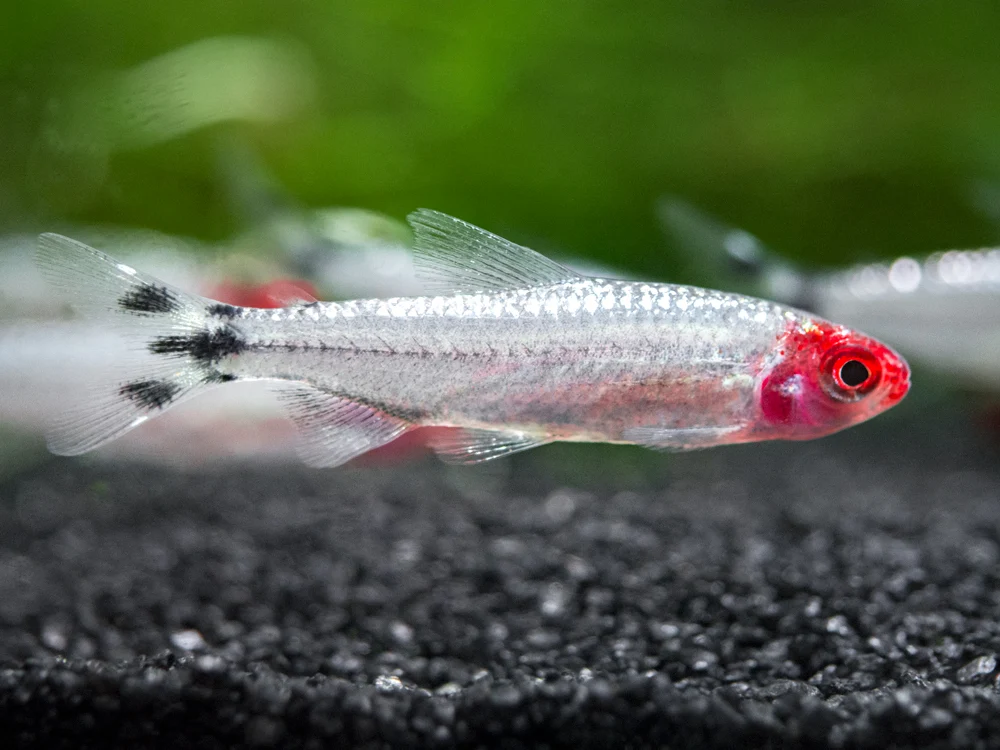
At a glance: Brilliant rummy-nose tetra care
Compiled reference information. Review the care notes and original sources below.
What temperature is listed for Brilliant rummy-nose tetra?
The compiled profile lists 22.2–29.0 °C for Brilliant rummy-nose tetra (Hemigrammus bleheri). Check the original sources below for context and differing recommendations.
What tank size is listed for Brilliant rummy-nose tetra?
The profile lists a minimum tank volume of 10.0 US gallons (37.9 liters). Volume alone does not establish suitability; consider dimensions, group size and other inhabitants alongside the full care notes.
What pH is listed for Brilliant rummy-nose tetra?
The compiled profile lists a pH of 5.5–7.5. Review the cited care sources alongside the other water parameters in this profile.
Natural habitat
The Brilliant Rummynose Tetra inhabits the freshwater rivers and streams of South America, primarily within the Amazon Basin. It thrives in well-planted areas with gentle currents, where it finds shelter among vegetation and driftwood. This habitat provides necessary food sources and breeding grounds.
Where they are found
These fish thrive in varying water conditions but prefer environments that mimic their natural habitats of the Amazon, which include shaded areas with plenty of plant life.
Aquarium care
To maintain the health of Brilliant Rummynose Tetras, it is crucial to provide a well-planted aquarium that mimics their natural habitat. Use floating plants and driftwood to create hiding spots and reduce light intensity. Regular water changes are essential to keep water conditions stable.
Feeding
Feed rummy-nose tetras a varied diet of high-quality flake and pellet foods, as well as occasional live or frozen options like daphnia and brine shrimp, to enhance their color and health.
Compatibility
These fish are peaceful and get along well with other community species of similar size, such as rasboras and other tetras. Avoid keeping them with aggressive fish or species that require cooler temperatures.
Breeding
Breeding this species requires a separate tank to prevent loss of fry. The tank should have slightly acidic water, and after spawning, the adults should be removed to protect the eggs and hatchlings. They are egg scatterers, and the eggs will adhere to surfaces.
Sources
Compiled from multiple independent care sheets — not copied from a single site.