Catalog / fish / Blunthead cichlid
fish · Cichlidae
Blunthead cichlid
Tropheus moorii
Wild range: East Africa (Africa)
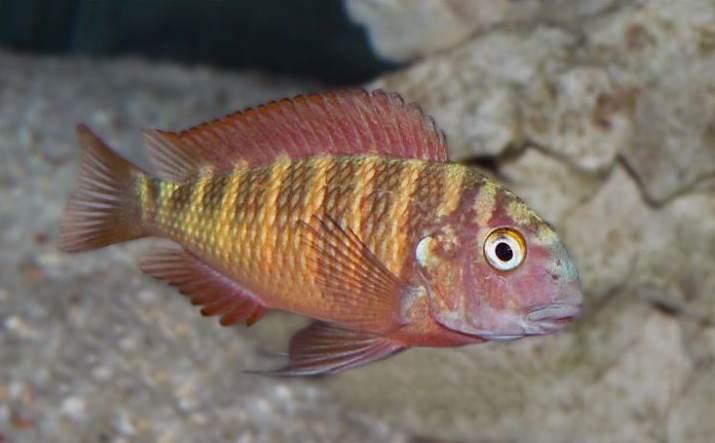
At a glance: Blunthead cichlid care
Compiled reference information. Review the care notes and original sources below.
What temperature is listed for Blunthead cichlid?
The compiled profile lists 24.0–28.0 °C for Blunthead cichlid (Tropheus moorii). Check the original sources below for context and differing recommendations.
What tank size is listed for Blunthead cichlid?
The profile lists a minimum tank volume of 52.8 US gallons (200.0 liters). Volume alone does not establish suitability; consider dimensions, group size and other inhabitants alongside the full care notes.
What pH is listed for Blunthead cichlid?
The compiled profile lists a pH of 7.0–8.5. Review the cited care sources alongside the other water parameters in this profile.
Natural habitat
The Blunthead Cichlid inhabits shallow, rocky shorelines of Lake Tanganyika, which is characterized by strong water movement and dense algae coverage. They establish small territories and are known for their vibrant color morphs, which include deep blues, blacks, and yellows. The species faces threats from overfishing and habitat degradation due to agricultural runoff and climate change.
Where they are found
Information is unavailable due to a critical error.
Aquarium care
To maintain a healthy environment for Blunthead Cichlids, aquarists should ensure strong water movement and high-quality filtration to simulate their natural habitat. Regular water changes and monitoring of water parameters are crucial. Tank decorations should include rocks and caves to provide hiding spots and territorial boundaries.
Feeding
Information is unavailable due to a critical error.
Compatibility
Information is unavailable due to a critical error.
Breeding
These Cichlids breed year-round, with males establishing territories to attract females. Males display through body posturing and color intensification. Females practice mouthbrooding, carrying fertilized eggs until they are ready to be released as fry. With limited numbers of offspring, high survival rates are crucial for the species' success.
Sources
Compiled from multiple independent care sheets — not copied from a single site.