Catalog / fish / Three-lined corydoras
fish · Callichthyidae
Three-lined corydoras
Corydoras trilineatus
Wild range: Amazon Basin (South America)
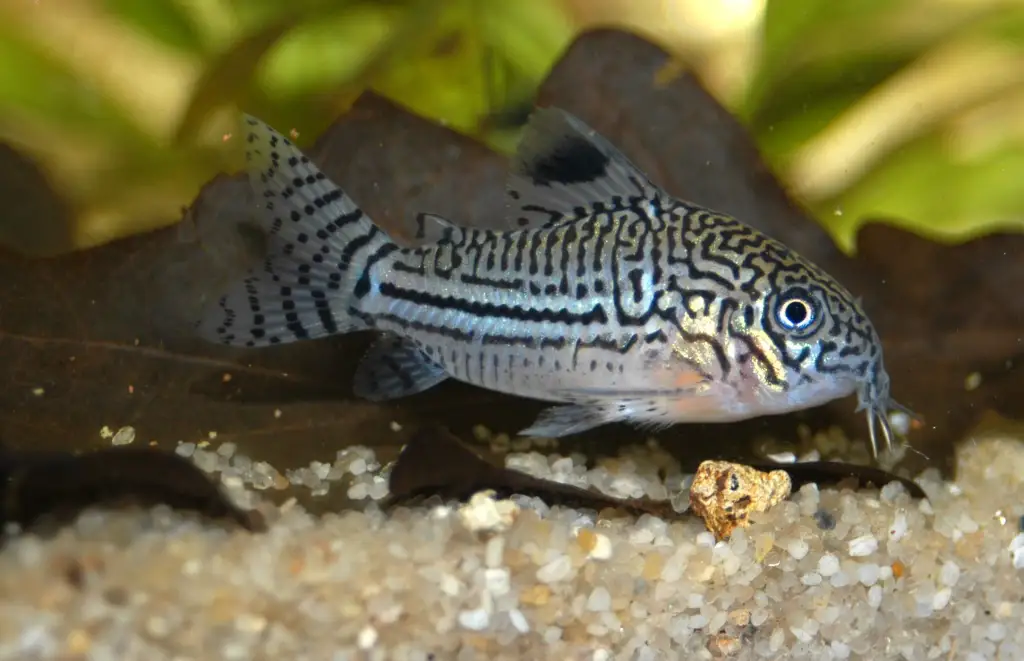
At a glance: Three-lined corydoras care
Compiled reference information. Review the care notes and original sources below.
What temperature is listed for Three-lined corydoras?
The compiled profile lists 18.0–26.1 °C for Three-lined corydoras (Corydoras trilineatus). Check the original sources below for context and differing recommendations.
What tank size is listed for Three-lined corydoras?
The profile lists a minimum tank volume of 7.9 US gallons (30.0 liters). Volume alone does not establish suitability; consider dimensions, group size and other inhabitants alongside the full care notes.
What pH is listed for Three-lined corydoras?
The compiled profile lists a pH of 5.5–7.5. Review the cited care sources alongside the other water parameters in this profile.
Natural habitat
The Three-lined Cory is found in the freshwater rivers of South America, particularly in the Amazon Basin. This species thrives in slow-moving waters with a soft substrate and plenty of hiding spots provided by plants and roots, mimicking their natural habitat.
Where they are found
The species is primarily located in states such as Ceará, Piauí, and Maranhão in Brazil. Despite a report of their occurrence in Peru, this is considered unlikely based on current evidence.
Aquarium care
To properly care for Corydoras trilineatus, it is essential to maintain a well-oxygenated and clean tank environment. Keeping the substrate free from debris and using a gentle filtration system is necessary to prevent damage to their sensitive barbels. Additional elements like driftwood and leaf litter can enhance the tank's natural appearance, while dim lighting is ideal to mimic their natural habitat.
Feeding
A varied diet is important, and these fish enjoy both live and frozen foods, such as Tubifex and black mosquito larvae. They will also accept high-quality prepared foods, ensuring a balanced diet. Regular feeding will help mimic their natural foraging behavior.
Compatibility
These fish are very peaceful and are suitable for a community tank with a variety of other small, non-aggressive species. They should be kept in groups of at least six to promote natural behaviors and reduce stress. Avoid larger or aggressive tankmates that may intimidate them.
Breeding
Breeding Julii Corydoras is straightforward. A ratio of two males to each female is recommended. Simulating rainy conditions via water changes can help trigger spawning, which usually leads to the female laying eggs on spawning mops or surfaces. The fry will require nutritious food once they hatch and consume their yolk sacs.
Sources
Compiled from multiple independent care sheets — not copied from a single site.