Catalog / fish / Three-striped apistogramma
fish · Cichlidae
Three-striped apistogramma
Apistogramma trifasciata
Wild range: tropical regions (South America)
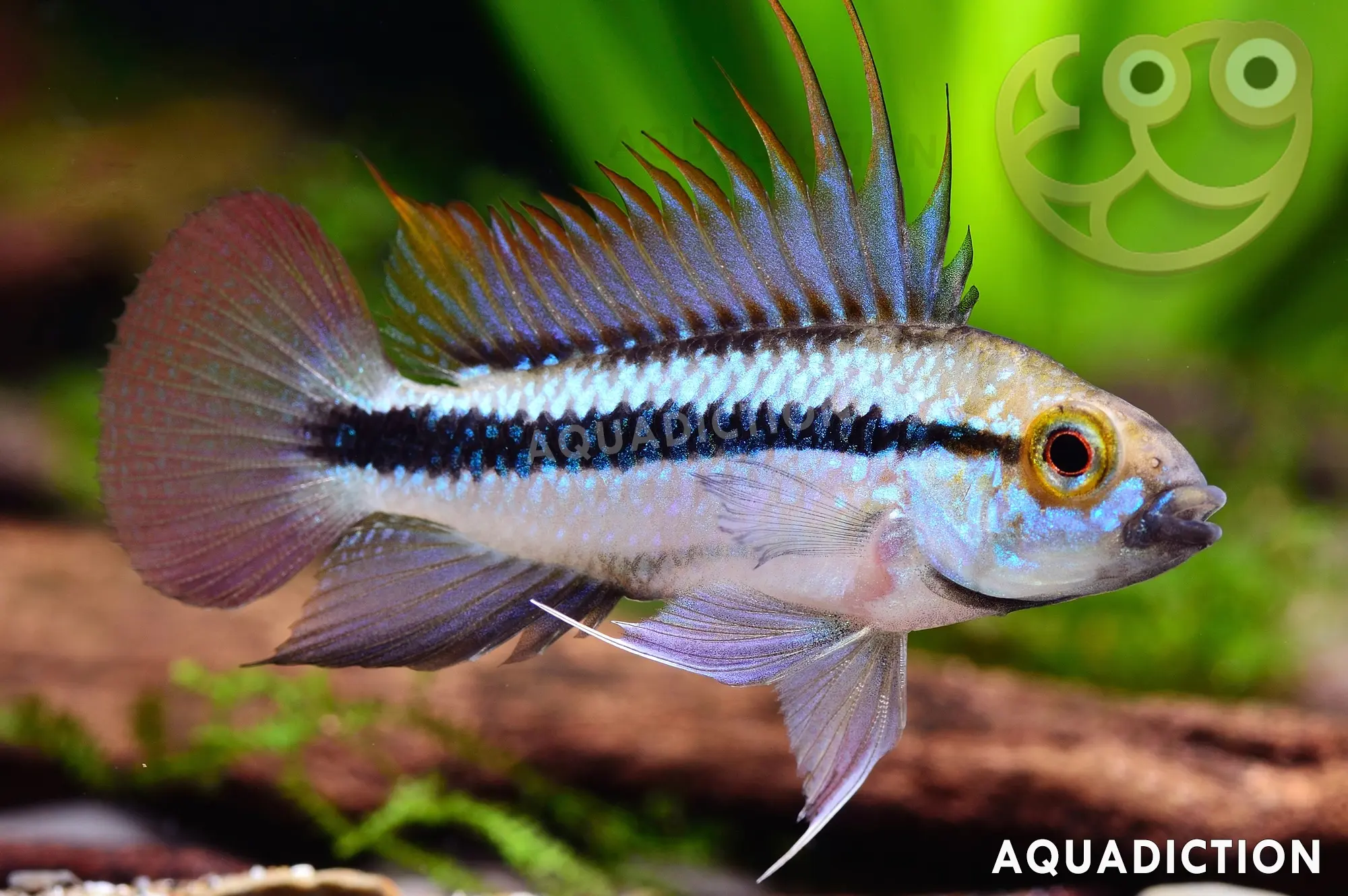
At a glance: Three-striped apistogramma care
Compiled reference information. Review the care notes and original sources below.
What temperature is listed for Three-striped apistogramma?
The compiled profile lists 20.0–30.0 °C for Three-striped apistogramma (Apistogramma trifasciata). Check the original sources below for context and differing recommendations.
What tank size is listed for Three-striped apistogramma?
The profile lists a minimum tank volume of 20.0 US gallons (75.0 liters). Volume alone does not establish suitability; consider dimensions, group size and other inhabitants alongside the full care notes.
What pH is listed for Three-striped apistogramma?
The compiled profile lists a pH of 5.0–7.0. Review the cited care sources alongside the other water parameters in this profile.
Natural habitat
Apistogrammas are commonly found in slow-moving waters across tropical regions in South America, particularly in areas with sandy bottoms and dense plant coverage. They gravitate towards soft, slightly acidic waters influenced by the decay of plant matter.
Where they are found
The wide distribution of Apistogramma trifasciata across southern Amazonian waters demonstrates its adaptability, particularly concerning water temperature and chemistry. This resilience makes it a favored choice for aquarists.
Aquarium care
For optimal care, maintain soft, acidic water with regular partial water changes to prevent nitrate accumulation. Use a dark substrate with dense planting and plenty of hiding spots to mimic their natural environment. A gentle filtration system will help circulate water without creating strong currents.
Feeding
Provide a varied diet rich in proteins, including live food like brine shrimp and glass worms, along with nutritious sinking pellets and occasional greens such as cucumbers or algae.
Compatibility
These cichlids can cohabitate peacefully with small tankmates such as Corydoras Catfish, Hatchetfish, and small Tetras. Caution is advised around similarly sized or territorial species during breeding.
Breeding
Apistogramma trifasciata engages in spawning behavior without forming long-term pair bonds. Breeding can occur in well-prepared tanks that feature secluded areas for egg-laying. Males exhibit territorial behaviors during this time, thus space management is crucial.
Sources
Compiled from multiple independent care sheets — not copied from a single site.