invertebrate · Neritidae
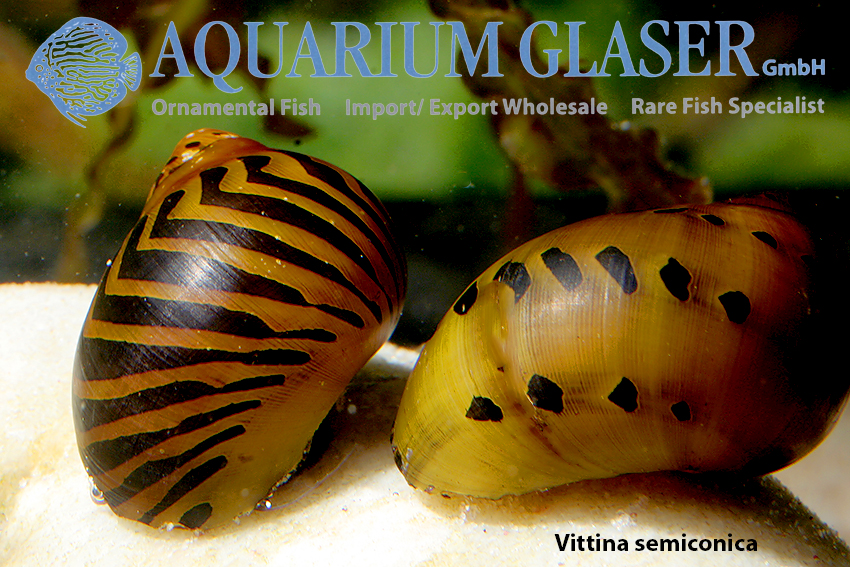
Tire track nerite
Vittina semiconica
Wild range: Southeast Asia (Asia)
At a glance: Tire track nerite care
Compiled reference information. Review the care notes and original sources below.
What temperature is listed for Tire track nerite?
The compiled profile lists 18.3–29.4 °C for Tire track nerite (Vittina semiconica). Check the original sources below for context and differing recommendations.
What tank size is listed for Tire track nerite?
The profile lists a minimum tank volume of 5.0 US gallons (19.0 liters). Volume alone does not establish suitability; consider dimensions, group size and other inhabitants alongside the full care notes.
What pH is listed for Tire track nerite?
The compiled profile lists a pH of 6.5–8.5. Review the cited care sources alongside the other water parameters in this profile.
Natural habitat
Vittina semiconica is an Indo-Pacific nerite of coastal rivers and streams. It lives on stones and wood in fresh to slightly brackish water and grazes algae and biofilm. Aquarium animals are mainly imported from Indonesia.
Where they are found
Recorded from Indonesia, with further records from the Philippines, India and Mauritius. Like other nerites, its larvae develop in brackish or marine water.
Aquarium care
Nerite snails are low-maintenance, needing water with a stable pH and moderate hardness, a gentle flow, and a calcium-rich diet for shell development. Regular tank maintenance is recommended to avoid high nitrate levels and ensure a suitable environment.
Feeding
Nerite snails are primarily herbivorous and thrive on algae, which should be abundant in the aquarium. It's advisable to supplement their diet with high-quality algae wafers to ensure proper nutrition, especially in tanks with low algal growth.
Compatibility
Nerite snails are ideal for community tanks as they are peaceful and can coexist with live plants and small fish species. However, large aggressive fish should be avoided to prevent predation.
Breeding
Nerite Snails breed by laying eggs, but they typically require brackish water to successfully hatch. This process makes breeding in home aquariums uncommon.
Sources
Compiled from multiple independent care sheets — not copied from a single site.