Catalog / plants / Tiger lotus
plant · Nymphaeaceae
Tiger lotus
Nymphaea lotus
Wild range: West Africa (Africa)
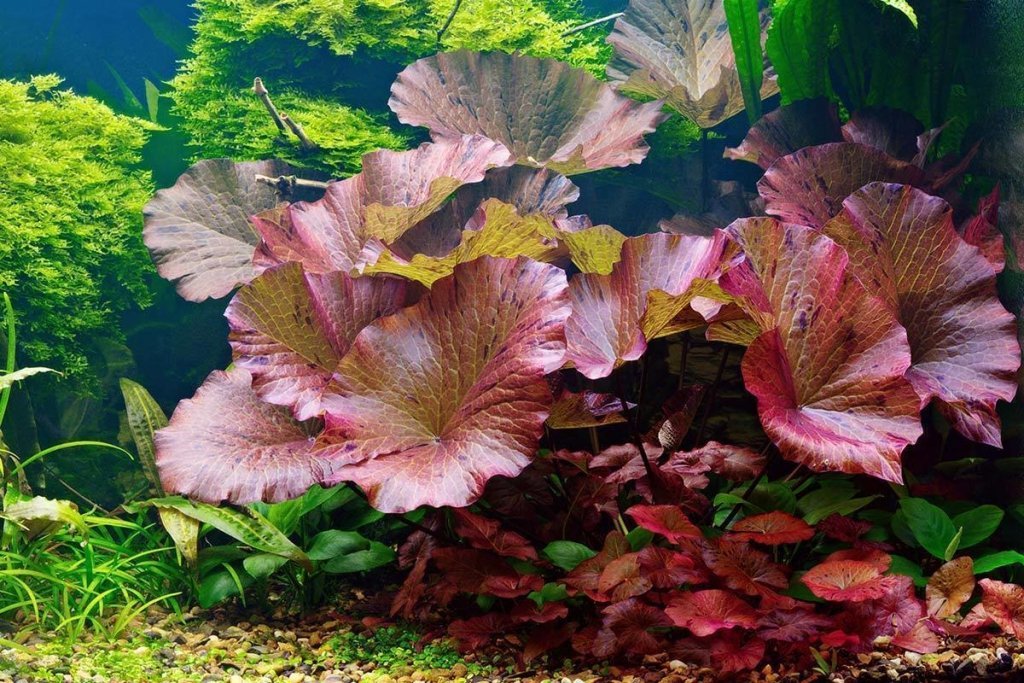
At a glance: Tiger lotus care
Compiled reference information. Review the care notes and original sources below.
What temperature is listed for Tiger lotus?
The compiled profile lists 21.7–30.0 °C for Tiger lotus (Nymphaea lotus). Check the original sources below for context and differing recommendations.
What tank size is listed for Tiger lotus?
The profile lists a minimum tank volume of 13.0 US gallons (50.0 liters). Volume alone does not establish suitability; consider dimensions, group size and other inhabitants alongside the full care notes.
What pH is listed for Tiger lotus?
The compiled profile lists a pH of 6.0–8.0. Review the cited care sources alongside the other water parameters in this profile.
Natural habitat
Nymphaea lotus is native to the freshwater lakes and rivers of West Africa. It is often found in still or slow-moving waters, where it can spread and thrive. This species forms both underwater leaves and floating leaves, depending on the depth of the water and light conditions. The plant's vibrant colors and floating leaves provide important habitat for various aquatic organisms.
Where they are found
Nymphaea lotus occurs naturally in various aquatic habitats in West Africa, where it occupies both still and slow-moving waters. Known for its adaptability, this species can flourish in diverse environmental conditions, while its striking appearance makes it a popular choice among aquarists.
Aquarium care
Nymphaea lotus requires a nutrient-rich substrate for optimal growth and to develop its beautiful foliage. Regular pruning is necessary to manage its size and shape, especially if floating leaves are not desired. The plant thrives with medium lighting and can benefit from supplemental CO2, although it is not strictly necessary. It prefers a gentle water flow and should be placed in a spacious tank to accommodate its growth.
Feeding
The Tiger Lotus is primarily a herbivorous plant that thrives on nutrients supplied from the substrate. Utilizing quality fertilizers or root tabs can enhance its growth and color vibrance, particularly when exposed to adequate lighting conditions.
Compatibility
Tiger Lotus is considered community-safe, providing shelter and cover for a variety of fish species. Its broad leaves create shaded areas in the aquarium, offering comfort to shy fish. However, it should be noted that the plant's size can impact neighboring flora, so adequate spacing and planning are advised.
Breeding
The plant can reproduce via seeds but more commonly through vegetative propagation. By dividing rhizomes or bulbs during maintenance, new plants can be easily established. The flowering process may require optimal conditions including adequate light and nutrients.
Sources
Compiled from multiple independent care sheets — not copied from a single site.