Catalog / fish / Three-spot gourami
fish · Osphronemidae
Three-spot gourami
Trichopodus trichopterus
Wild range: Southeast Asia (Asia)
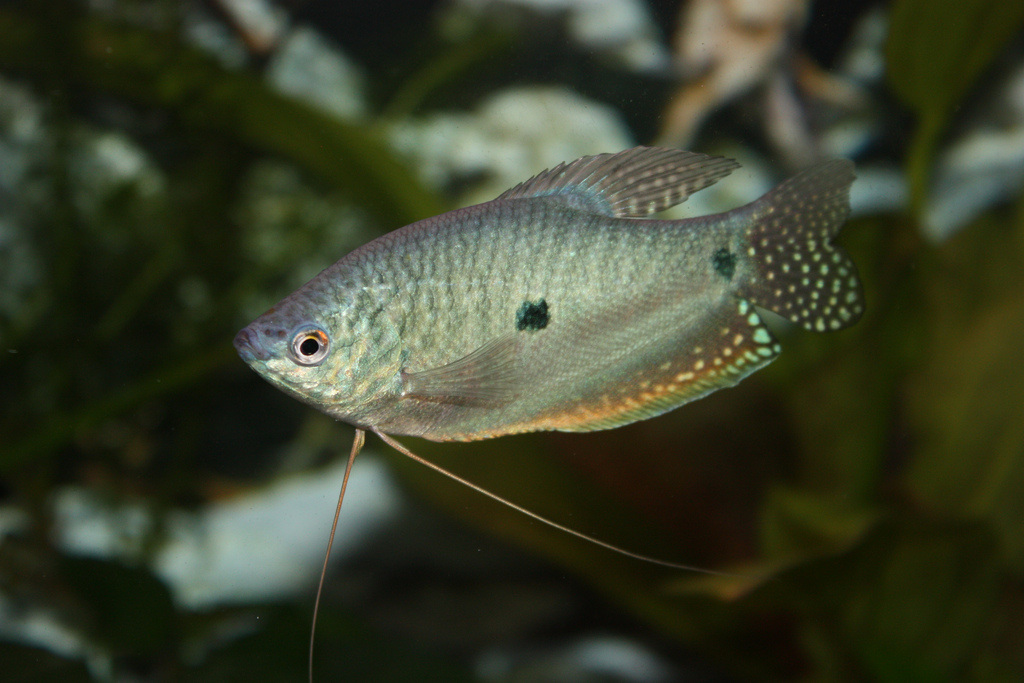
At a glance: Three-spot gourami care
Compiled reference information. Review the care notes and original sources below.
What temperature is listed for Three-spot gourami?
The compiled profile lists 22.0–28.0 °C for Three-spot gourami (Trichopodus trichopterus). Check the original sources below for context and differing recommendations.
What tank size is listed for Three-spot gourami?
The profile lists a minimum tank volume of 20.0 US gallons (75.0 liters). Volume alone does not establish suitability; consider dimensions, group size and other inhabitants alongside the full care notes.
What pH is listed for Three-spot gourami?
The compiled profile lists a pH of 6.0–8.8. Review the cited care sources alongside the other water parameters in this profile.
Natural habitat
The Blue Gourami is native to the waters of Southeast Asia, thriving in lakes, rivers, and wetlands characterized by slow-moving or still water. They prefer warm, shallow waters often covered with dense vegetation, which offers plenty of hiding spots and breeding grounds.
Where they are found
Their natural range includes various freshwater habitats in Thailand, Malaysia, Indonesia, and Vietnam, typically characterized by warm temperatures and plenty of vegetation.
Aquarium care
Keeping three-spot gouramis requires a planted tank with gentle water flow. They are very adaptable and can live happily in a range of temperatures from 22°C to 28°C. Regular water changes and good filtration are essential to maintain optimal conditions.
Feeding
Blue Gouramis are not picky eaters and will accept a variety of foods, such as flakes, pellets, and live or frozen options. Their diet should be well-balanced, with a focus on high-quality protein sources like bloodworms and brine shrimp to promote growth and color.
Compatibility
While three-spot gouramis are generally peaceful, males can be territorial and aggressive towards one another, especially in smaller tanks. They can be kept with a variety of other community fish but should be monitored for signs of aggression. A ratio of one male to several females is ideal to reduce tensions among males.
Breeding
Breeding Blue Gouramis in captivity requires specific conditions, including warm, soft water, and the presence of floating plants for bubble nest construction. Males build bubble nests and invite females to spawn, guarding the nest and fry thereafter.
Sources
Compiled from multiple independent care sheets — not copied from a single site.