Catalog / fish / Three-lined pencilfish
fish · Lebiasinidae
Three-lined pencilfish
Nannostomus trifasciatus
Wild range: Neotropical (South America)
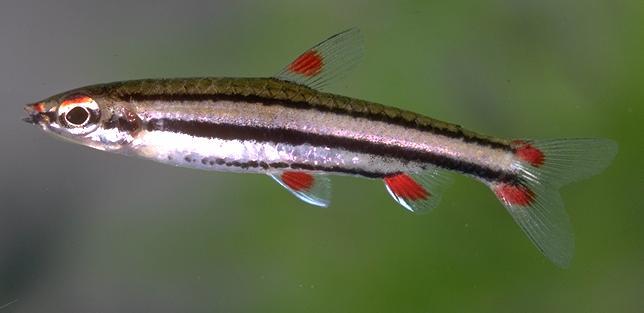
At a glance: Three-lined pencilfish care
Compiled reference information. Review the care notes and original sources below.
What temperature is listed for Three-lined pencilfish?
The compiled profile lists 22.0–28.0 °C for Three-lined pencilfish (Nannostomus trifasciatus). Check the original sources below for context and differing recommendations.
What tank size is listed for Three-lined pencilfish?
The profile lists a minimum tank volume of 8.0 US gallons (30.0 liters). Volume alone does not establish suitability; consider dimensions, group size and other inhabitants alongside the full care notes.
What pH is listed for Three-lined pencilfish?
The compiled profile lists a pH of 5.5–7.4. Review the cited care sources alongside the other water parameters in this profile.
Natural habitat
Nannostomus trifasciatus thrives in slow-moving, peaty waters that are slightly acidic, often found in shaded and weedy areas. They inhabit various habitat types, including large swamps and the inundated rainforest during flooding.
Where they are found
Fluctuations in water conditions, typically including soft, acidic waters, are common in the fish's natural habitat, with a pH between 5.5 and 7.0 and temperatures ranging from 24°C to 28°C.
Aquarium care
To keep Beckford's pencilfish, ensure a well-planted tank with subdued lighting. They appreciate the cover of plants and require high water quality. Regular water changes and careful monitoring of ammonia, nitrite, and nitrate levels are essential for their health.
Feeding
This species feeds mainly on insects near the water's surface, but in captivity, they will readily accept most standard fish foods, including flakes, pellets, and freeze-dried options.
Compatibility
Beckford's pencilfish are best kept in groups of at least three. They are compatible with a variety of community fish but should not be housed with aggressive species. Ideal tankmates include larger tetras, gentle cichlids, and small bottom dwellers.
Breeding
Breeding requires a separate tank with dense plant cover. Condition the pair with high-protein diets. Remove adult fish after spawning to protect eggs and fry.
Sources
Compiled from multiple independent care sheets — not copied from a single site.