invertebrate · Viviparidae
Thai trapdoor snail
Filopaludina martensi
Wild range: Southeast Asia (Asia)
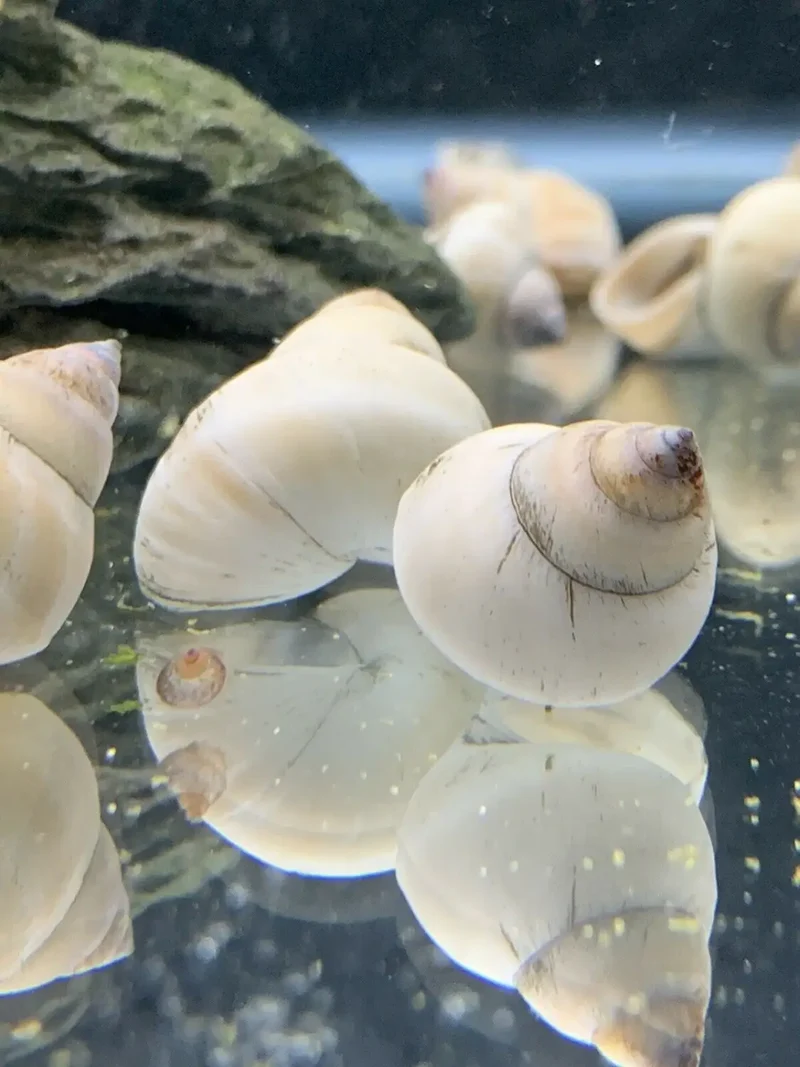
At a glance: Thai trapdoor snail care
Compiled reference information. Review the care notes and original sources below.
What temperature is listed for Thai trapdoor snail?
The compiled profile lists 20.0–31.0 °C for Thai trapdoor snail (Filopaludina martensi). Check the original sources below for context and differing recommendations.
What tank size is listed for Thai trapdoor snail?
The profile lists a minimum tank volume of 10.0 US gallons (38.0 liters). Volume alone does not establish suitability; consider dimensions, group size and other inhabitants alongside the full care notes.
What pH is listed for Thai trapdoor snail?
The compiled profile lists a pH of 6.8–8.5. Review the cited care sources alongside the other water parameters in this profile.
Natural habitat
Still to slow-moving freshwater canals, ponds, swamps, ditches, lakes, and rice fields. Filter-feeds and grazes biofilm; commonly burrows in soft sandy substrate.
Where they are found
Native to Southeast Asia (Thailand, Cambodia, Laos, Vietnam, Malaysia, Indonesia, Philippines; type locality Siam). Distinct from Cipangopaludina spp. marketed as Chinese/Japanese trapdoor snails; not the late-1800s North American invader.
Aquarium care
White Wizard Snails are relatively easy to keep. They require a tank size of at least 40 liters for a few snails to thrive. Regular water changes and good water quality are recommended to maintain their health.
Feeding
Feeding notes are unavailable.
Compatibility
White Wizard Snails are peaceful and make great companions in community tanks. However, they should be kept away from aggressive fish species such as cichlids and loaches that may harm them.
Breeding
They reproduce slowly, giving birth to live young after a gestation period of about nine months. They do not require a separate breeding tank and can reproduce naturally in the main aquarium.
Sources
Compiled from multiple independent care sheets — not copied from a single site.