Catalog / fish / Striped lyretail
fish · Nembriantidae
Striped lyretail
Aphyosemion striatum
Wild range: West Africa (Africa)
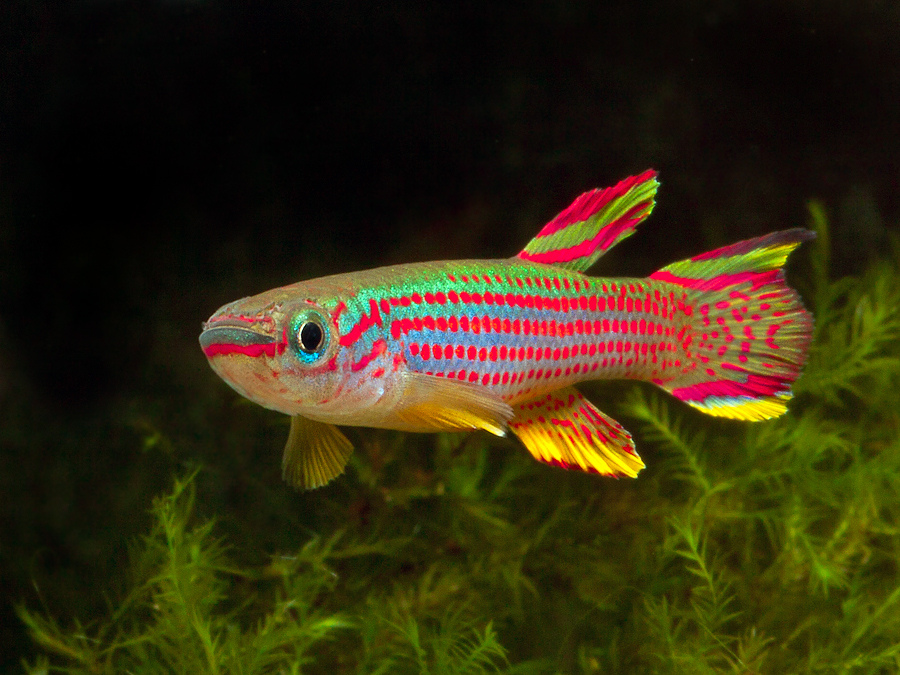
At a glance: Striped lyretail care
Compiled reference information. Review the care notes and original sources below.
What temperature is listed for Striped lyretail?
The compiled profile lists 20.0–24.0 °C for Striped lyretail (Aphyosemion striatum). Check the original sources below for context and differing recommendations.
What tank size is listed for Striped lyretail?
The profile lists a minimum tank volume of 5.0 US gallons (20.0 liters). Volume alone does not establish suitability; consider dimensions, group size and other inhabitants alongside the full care notes.
What pH is listed for Striped lyretail?
The compiled profile lists a pH of 6.5–7.5. Review the cited care sources alongside the other water parameters in this profile.
Natural habitat
Aphyosemion striatum typically inhabits shallow waters rich in vegetation. These areas provide suitable breeding grounds and food sources, making them ideal for their life cycle.
Where they are found
This species is primarily found in the lower Mitmele River in Equatorial Guinea and the lower Ogooué basin in Gabon, as well as in various watersheds within these regions.
Aquarium care
Maintain stable water conditions with regular changes to ensure health. The use of a sponge filter is advisable to keep water quality high. This species thrives in softer, slightly acidic water.
Feeding
In captivity, the diet of Red Striped Killifish should consist of high-quality small live, frozen, and freeze-dried foods like Daphnia, bloodworms, and brine shrimp, as well as good quality omnivore flake food.
Compatibility
The species is peaceful and makes a good addition to community tanks with similarly small, non-aggressive fish. It’s important to have a tight-fitting tank cover to prevent them from jumping.
Breeding
Use a spawning mop or similar structure to encourage egg laying. Ideal conditions include stable temperature and water hardness. Incubate eggs in well-maintained conditions to avoid fungal infections.
Sources
Compiled from multiple independent care sheets — not copied from a single site.