Catalog / fish / Spotted Raphael catfish
fish · Doradidae
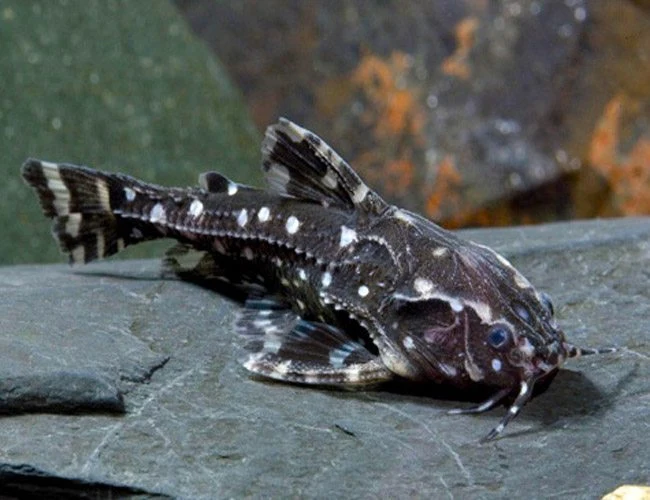
Spotted Raphael catfish
Agamyxis pectinifrons
Wild range: Amazon Basin (South America)
At a glance: Spotted Raphael catfish care
Compiled reference information. Review the care notes and original sources below.
What temperature is listed for Spotted Raphael catfish?
The compiled profile lists 23.0–27.8 °C for Spotted Raphael catfish (Agamyxis pectinifrons). Check the original sources below for context and differing recommendations.
What tank size is listed for Spotted Raphael catfish?
The profile lists a minimum tank volume of 30.0 US gallons (113.6 liters). Volume alone does not establish suitability; consider dimensions, group size and other inhabitants alongside the full care notes.
What pH is listed for Spotted Raphael catfish?
The compiled profile lists a pH of 6.0–7.6. Review the cited care sources alongside the other water parameters in this profile.
Natural habitat
The Striped Raphael Catfish is native to freshwater habitats in the Amazon, Essequibo, Orinoco, Parnaíba, and Tocantins river basins. It typically inhabits rivers and streams with sandy bottoms, often found among mangrove roots.
Where they are found
Primarily found in the Amazon River basin, this species prefers habitats with abundant hiding spots such as caves, rocks, and dense vegetation, allowing it to evade predators.
Aquarium care
In captivity, the Spotted Raphael Catfish is easy to care for, being hardy and adaptable to varying water parameters. A well-decorated tank with hiding spots like caves and driftwood will help reduce stress and promote a healthy environment.
Feeding
While in the wild, these catfish consume crustaceans, mollusks, and organic debris. In captivity, they can be fed blood worms, fish flakes, and sinking catfish pellets.
Compatibility
Generally, they are peaceful and compatible with medium to large fish, though they may eat very small fish or invertebrates. Providing plenty of cover can reduce territorial disputes with other tankmates.
Breeding
Breeding this species in captivity can be challenging due to their specific spawning requirements. They are known to spawn in caves, where females lay eggs that are fertilized by males. Provide a suitable breeding environment in a separate tank for best results.
Sources
Compiled from multiple independent care sheets — not copied from a single site.