Catalog / fish / Spotted danio
fish · Cyprinidae
Spotted danio
Danio nigrofasciatus
Wild range: Southeast Asia (Asia)
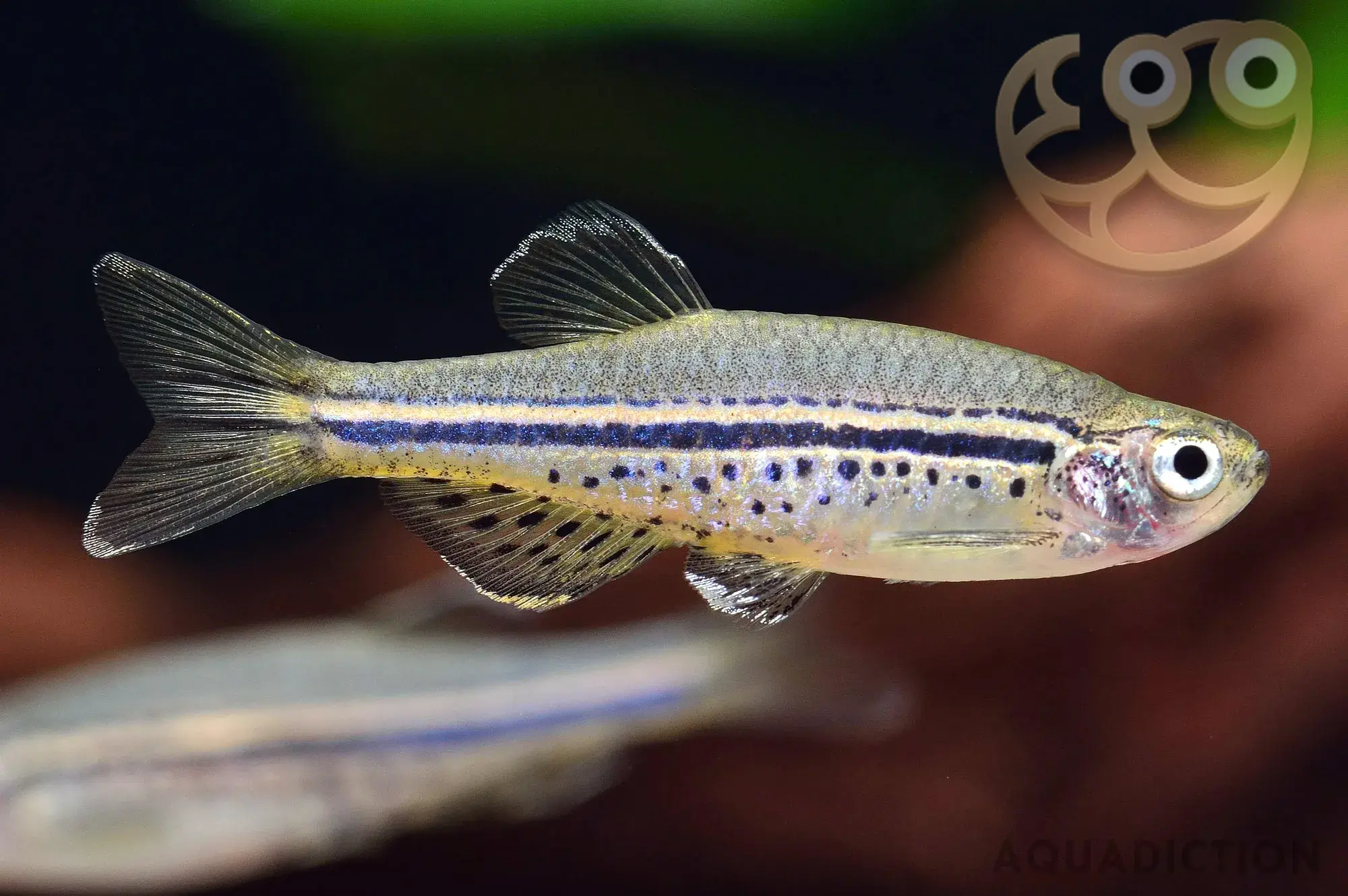
At a glance: Spotted danio care
Compiled reference information. Review the care notes and original sources below.
What temperature is listed for Spotted danio?
The compiled profile lists 17.8–27.0 °C for Spotted danio (Danio nigrofasciatus). Check the original sources below for context and differing recommendations.
What tank size is listed for Spotted danio?
The profile lists a minimum tank volume of 10.0 US gallons (38.0 liters). Volume alone does not establish suitability; consider dimensions, group size and other inhabitants alongside the full care notes.
What pH is listed for Spotted danio?
The compiled profile lists a pH of 6.0–7.8. Review the cited care sources alongside the other water parameters in this profile.
Natural habitat
Zebra Danios are native to freshwater habitats in Southeast Asia, primarily found in rivers and streams with a moderate flow. They thrive in a variety of environments, showcasing exceptional adaptability to different water conditions.
Where they are found
This species primarily inhabits the freshwater systems of Southeast Asia, adapting well to diverse aquatic environments, thus contributing to their popularity in the aquarium trade.
Aquarium care
To keep Dwarf Spotted Danios healthy, create a heavily planted aquarium that mimics their natural habitat with gentle water flow, dark substrate, and plenty of hiding spots. Maintain stable water conditions with a pH between 6.5 and 7.0, a hardness of 5 to 12 dGH, and a temperature range of 23 to 27°C.
Feeding
Zebra Danios are omnivores and thrive on a varied diet that includes high-quality flake food, live, and frozen foods such as brine shrimp and bloodworms. It's beneficial to feed them multiple times a day in small quantities to encourage their active behavior and health.
Compatibility
Dwarf Spotted Danios are social and should be kept in groups of at least eight. They are compatible with other small, peaceful fish but should be kept away from larger or aggressive species that may cause stress.
Breeding
Breeding requires a separate breeding tank with fine-leaved plants. Female Danios will scatter eggs in the plants, where males can fertilize them. After breeding, adults should be removed to prevent them from eating the eggs.
Sources
Compiled from multiple independent care sheets — not copied from a single site.