Catalog / fish / Spotted blue-eye
fish · Pseudomugilidae
Spotted blue-eye
Pseudomugil gertrudae
Wild range: Northern Australia and New Guinea (Australia)
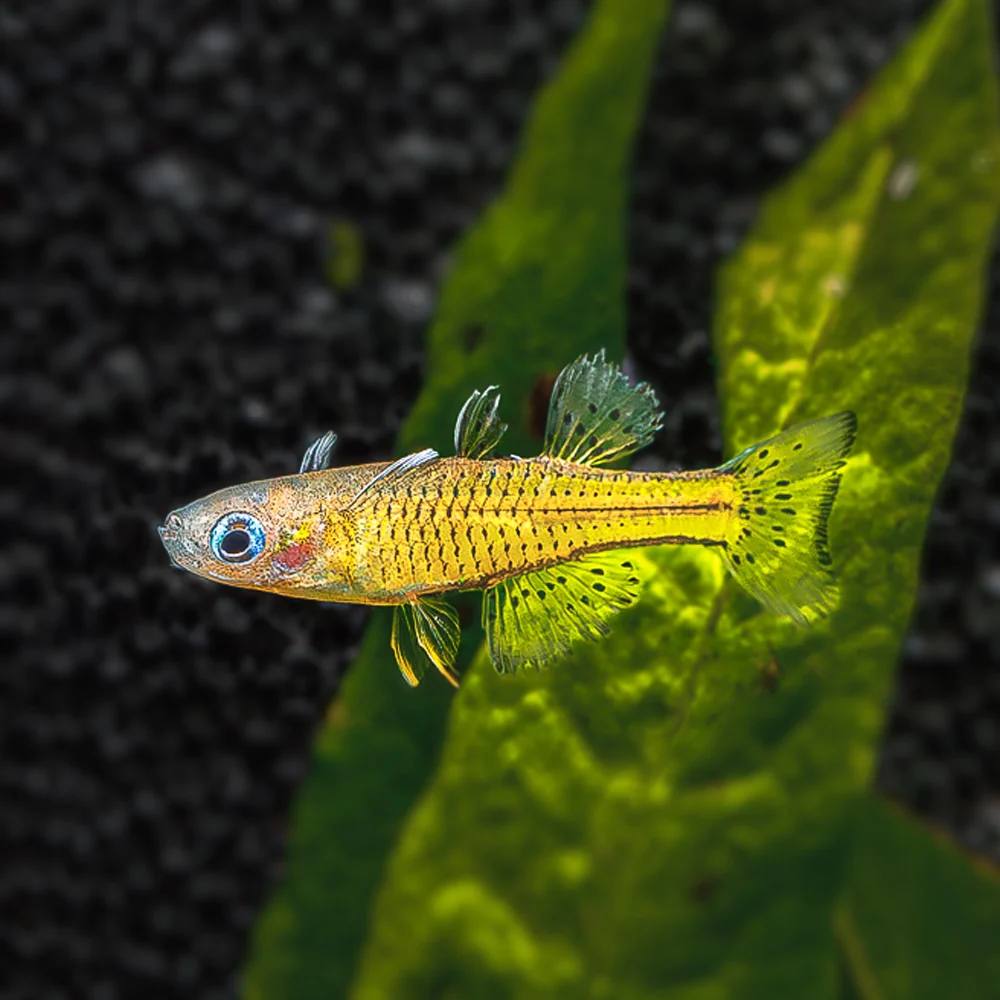
At a glance: Spotted blue-eye care
Compiled reference information. Review the care notes and original sources below.
What temperature is listed for Spotted blue-eye?
The compiled profile lists 22.2–30.0 °C for Spotted blue-eye (Pseudomugil gertrudae). Check the original sources below for context and differing recommendations.
What tank size is listed for Spotted blue-eye?
The profile lists a minimum tank volume of 10.0 US gallons (37.9 liters). Volume alone does not establish suitability; consider dimensions, group size and other inhabitants alongside the full care notes.
What pH is listed for Spotted blue-eye?
The compiled profile lists a pH of 5.2–7.6. Review the cited care sources alongside the other water parameters in this profile.
Natural habitat
Pseudomugil gertrudae is native to the slow-moving waters and wetlands of northern Australia and New Guinea. This species thrives in well-planted environments with ample vegetation, providing hiding places and open swimming areas. Due to their active nature, they appreciate stable water conditions and gentle flow.
Where they are found
The Spotted Blue Eye Rainbowfish is native to the freshwater systems of Australia, particularly in northern regions such as the Northern Territory and Queensland. Their populations can usually be found in well-planted areas, offering them safety from predators and a suitable environment for feeding.
Aquarium care
For aquarium care, Spotted Blue-Eye requires a well-maintained environment with high water quality. Regular water changes and a cycled tank are essential, as these fish are sensitive to water parameter fluctuations. They benefit from a planted tank with plenty of hiding spots to feel secure.
Feeding
Pseudomugil gertrudae is an omnivore that thrives on a varied diet including high-quality micro pellets, crushed flakes, baby brine shrimp, daphnia, frozen cyclops, and small live foods. A diverse diet aids in enhancing their coloration and breeding behavior.
Compatibility
This species is peaceful and can be kept in community tanks with other small, non-aggressive fish. It is best maintained in groups of at least 10 to prevent stress and promote natural behavior.
Breeding
Breeding these fish can be a rewarding endeavor, as they are egg scatterers. Providing fine-leaved plants for spawning, along with stable water temperature and conditions, will encourage them to lay eggs. The eggs hatch in about 7-10 days, and the fry should be fed infusoria until large enough for baby brine shrimp or crushed flake food.
Sources
Compiled from multiple independent care sheets — not copied from a single site.