Catalog / fish / Sparkling gourami
fish · Osphronemidae
Sparkling gourami
Trichopsis pumila
Wild range: Southeast Asia (Asia)
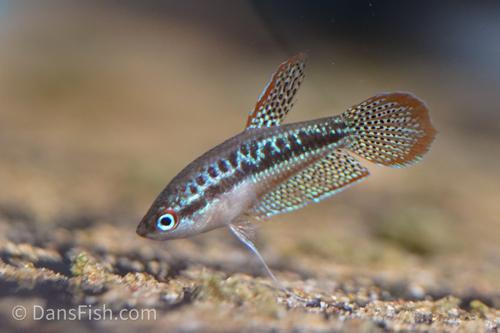
At a glance: Sparkling gourami care
Compiled reference information. Review the care notes and original sources below.
What temperature is listed for Sparkling gourami?
The compiled profile lists 24.0–28.0 °C for Sparkling gourami (Trichopsis pumila). Check the original sources below for context and differing recommendations.
What tank size is listed for Sparkling gourami?
The profile lists a minimum tank volume of 2.5 US gallons (10.0 liters). Volume alone does not establish suitability; consider dimensions, group size and other inhabitants alongside the full care notes.
What pH is listed for Sparkling gourami?
The compiled profile lists a pH of 5.5–7.5. Review the cited care sources alongside the other water parameters in this profile.
Natural habitat
The Sparkling Gourami prefers slow-moving or stagnant waters found in swamps, tributaries of rivers, flood plains, and irrigation channels. The species thrives in environments rich in vegetation, roots, and leaves, making it essential to recreate such conditions in an aquarium for optimal health and behavior.
Where they are found
This species is native to regions of Thailand and Cambodia, where they adapt to substantial variations in water levels and quality.
Aquarium care
These fish prefer clean and stable water conditions, with a gentle flow and preferably a heavily planted tank. Water changes should be performed regularly to maintain quality. Provision of hiding spaces is crucial when keeping them in groups to reduce stress.
Feeding
This species enjoys a variety of foods, including high-quality flake foods, frozen or live foods like daphnia and brine shrimp, and finely chopped vegetables. Ensure to provide a balanced diet to keep the fish vibrant and healthy.
Compatibility
Sparkling gouramis are best kept with non-aggressive fish of similar size, such as dwarf gouramis and small tetras. They should not be housed with aggressive or fast-moving species, which may stress them.
Breeding
Breeding requires a bubble nest, which the male constructs from bubbles and guards. The spawning process entails the male and female embracing, during which croaking noises are emitted. After laying eggs, which hatch within 24-48 hours, the fry need infusoria as their first food and can be transitioned to brine shrimp as they grow.
Sources
Compiled from multiple independent care sheets — not copied from a single site.