fish · Osphronemidae
Slim betta
Betta bellica
Wild range: Southeast Asia (Asia)
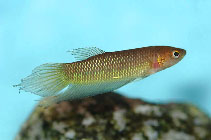
At a glance: Slim betta care
Compiled reference information. Review the care notes and original sources below.
What temperature is listed for Slim betta?
The compiled profile lists 24.0–30.0 °C for Slim betta (Betta bellica). Check the original sources below for context and differing recommendations.
What tank size is listed for Slim betta?
The profile lists a minimum tank volume of 5.0 US gallons (19.0 liters). Volume alone does not establish suitability; consider dimensions, group size and other inhabitants alongside the full care notes.
What pH is listed for Slim betta?
The compiled profile lists a pH of 6.5–7.5. Review the cited care sources alongside the other water parameters in this profile.
Natural habitat
Betta bellica is typically found in shallow waters of peat swamps and swamp forests, where it thrives in warm, tropical conditions.
Where they are found
Their natural habitat includes rice paddies, swamps, and marshes in Thailand, Cambodia, and Vietnam, where they have adapted to thrive in various water conditions, including low oxygen environments due to their labyrinth organ that allows them to breathe air.
Aquarium care
In aquaria, Betta bellica prefers gentle water flow, ideally kept in well-planted tanks that mimic their natural habitat. Water parameters should be monitored to align with their native conditions, and temperature should be maintained within the tropical range of 24-30°C.
Feeding
As carnivores, Bettas require a diet high in protein. Offer high-quality pellets, along with occasional treats of frozen or live foods like brine shrimp and bloodworms. Feed once or twice daily, ensuring to remove uneaten food to keep the tank clean.
Compatibility
Male Bettas are very territorial and should not be kept with other males or fish with similar fin shapes or colors. Female Bettas may tolerate one another in a sorority if the tank is spacious and well-planted, but caution is advised.
Breeding
Breeding involves the male building a bubble nest at the water's surface, where he can attract a female. After spawning, the male will guard the nest until the fry are free-swimming.
Sources
Compiled from multiple independent care sheets — not copied from a single site.