fish · Serrasalmidae
Silver dollar (argenteus)
Metynnis argenteus
Wild range: Rio Tapajós basin, Brazil (FishBase; Seriously Fish: probably endemic to the Tapajós drainage). (South America)
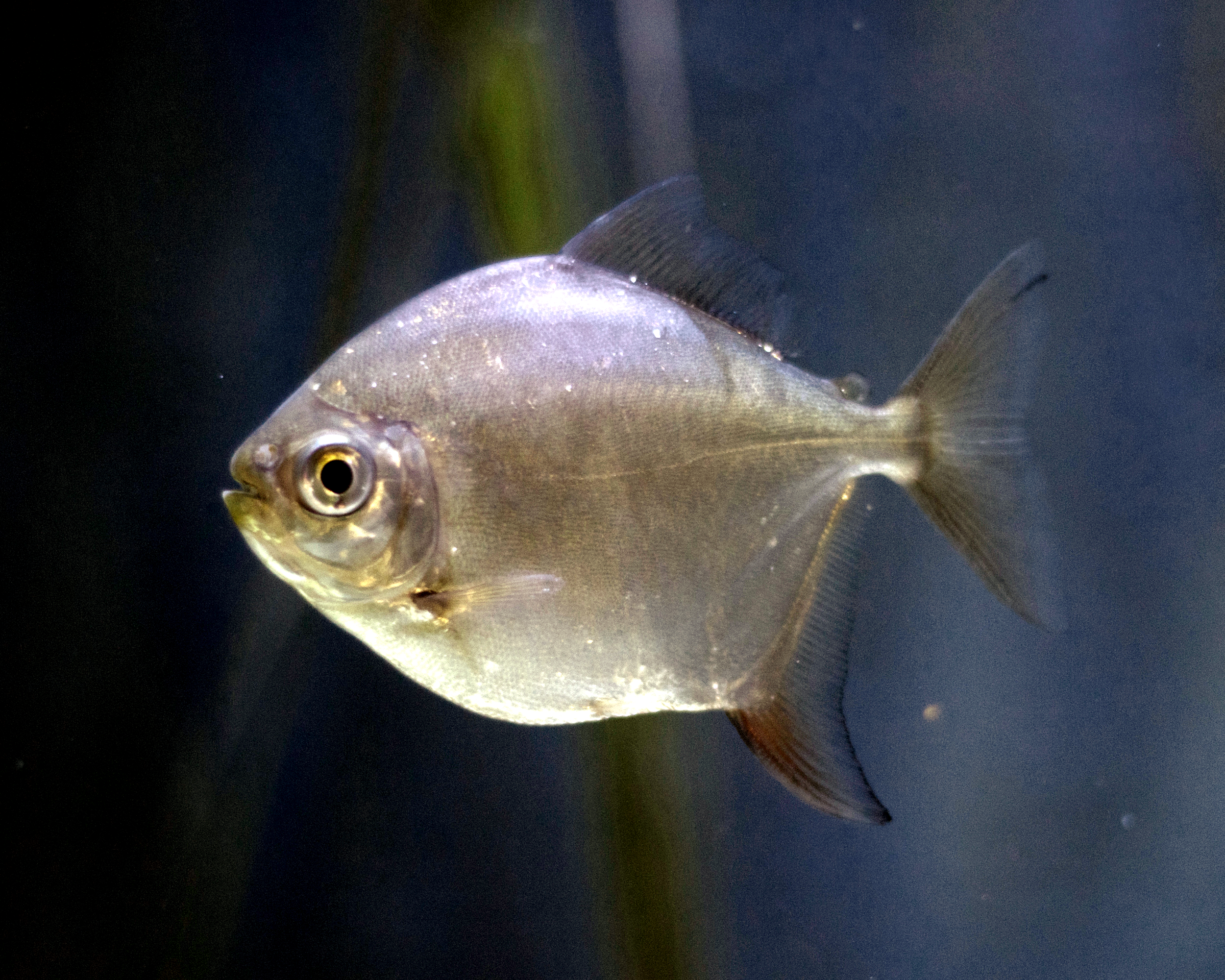

At a glance: Silver dollar (argenteus) care
Compiled reference information. Review the care notes and original sources below.
What temperature is listed for Silver dollar (argenteus)?
The compiled profile lists 24.0–28.0 °C for Silver dollar (argenteus) (Metynnis argenteus). Check the original sources below for context and differing recommendations.
What tank size is listed for Silver dollar (argenteus)?
The profile lists a minimum tank volume of 74.0 US gallons (280.0 liters). Volume alone does not establish suitability; consider dimensions, group size and other inhabitants alongside the full care notes.
What pH is listed for Silver dollar (argenteus)?
The compiled profile lists a pH of 6.0–7.0. Review the cited care sources alongside the other water parameters in this profile.
Natural habitat
A large, disc-shaped silver characin from the Rio Tapajós basin in Brazil and one of the two species sold as the silver dollar. It is a peaceful but nervous schooling fish that grows to about 15 cm, needs a long tank and a group of at least six, and eats live plants, so it is usually kept with hardy or artificial plants.
Where they are found
Metynnis argenteus Ahl, 1923 is valid in ITIS (TSN 163248), GBIF (2353432, accepted), FishBase (25518) and Catalog of Fishes. Junior synonym: Metynnis eigenmanni Ahl, 1923. Older hobby and museum material identified as Metynnis lippincottianus (non Cope, 1870) is a misapplied name per FishBase, so it is noted here rather than aliased. Range: Tapajós River basin, Brazil (FishBase); Seriously Fish calls it probably endemic to the Tapajós drainage. In the trade both M. argenteus and M. hypsauchen are sold as 'silver dollar'. They are almost identical in looks and care, but M. hypsauchen has a black blotch above and behind each eye (Seriously Fish); see our Silver dollar page for M. hypsauchen. Max length 14 cm SL (FishBase) / 150 mm SL (Seriously Fish). IUCN: Least Concern (assessed 2020, per FishBase).
Aquarium care
A group of adults needs a long tank of about 260-300 L, at least 180 cm long (Seriously Fish 260 L; Aquadiction 280 L; Atlarium 300 L). Juveniles can start smaller. Keep it at 24-28°C, pH 6.0-7.0 and soft to moderately hard water up to about 15 dGH (Seriously Fish; FishBase; Atlarium; Aquadiction). Use a large, efficient filter, keep water quality high, and leave plenty of open swimming space with driftwood or rocks around the edges (Aquadiction). It is skittish, so dim lighting, cover and a tight lid help, because a startled group can dart into the glass or jump (Seriously Fish; Atlarium). It eats most live plants, so use tough or artificial plants (Seriously Fish; Wikipedia).
Feeding
Mainly a herbivore that also takes some animal food. Base the diet on vegetable-rich flakes, pellets or algae wafers and blanched greens such as spinach, lettuce, cucumber or peas, with bloodworm, brine shrimp or Daphnia as occasional extras (Seriously Fish; Atlarium; Wikipedia; Aquadiction).
Compatibility
Peaceful and gregarious; keep at least 6 (Atlarium; Aquadiction; Seriously Fish says 5 or more). It may eat much smaller fish (Seriously Fish). It lives in the middle and upper water, so larger peaceful bottom dwellers such as plecos and doradid catfish make good tankmates, and it also works as a dither fish with large South American cichlids (Seriously Fish; Atlarium).
Breeding
Moderately difficult because it needs a large tank and a conditioned group. Use soft, acidic water and raise the temperature to about 28°C; a slightly warmer water change can trigger spawning. Ready males darken, especially on the anal, caudal and dorsal fins, and court females with a side-by-side shimmy. Males have a longer anal fin, often with a red tinge, and females are fuller-bodied (Seriously Fish; Wikipedia; Aquadiction).
Sources
Compiled from multiple independent care sheets — not copied from a single site.