Catalog / fish / Scarlet badis
fish · Badidae
Scarlet badis
Dario dario
Wild range: South Asia (Asia)
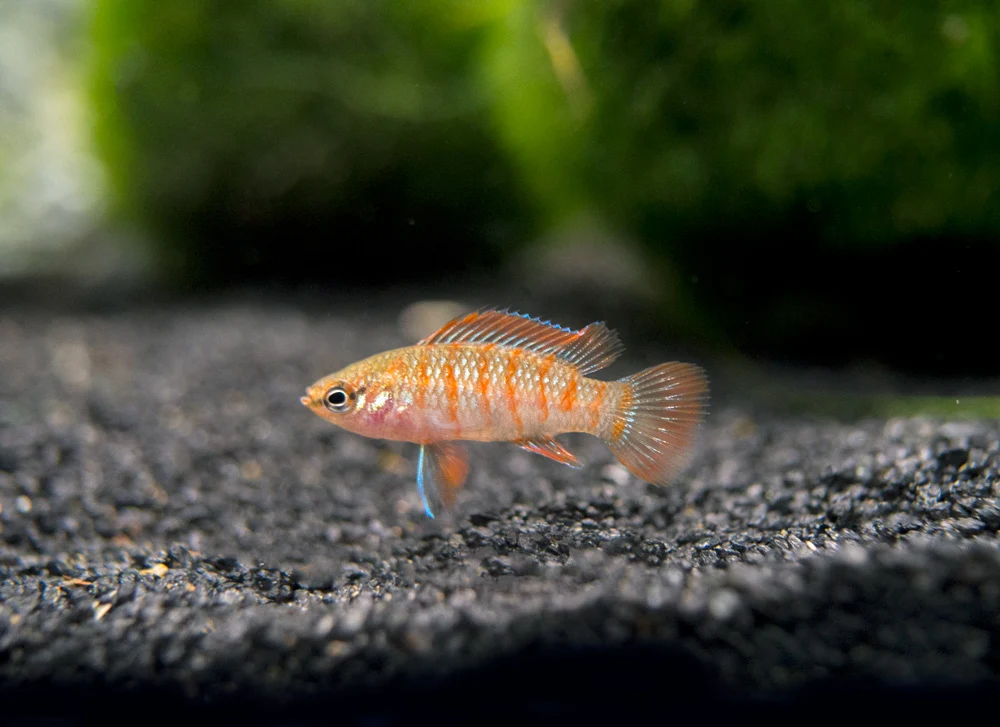
At a glance: Scarlet badis care
Compiled reference information. Review the care notes and original sources below.
What temperature is listed for Scarlet badis?
The compiled profile lists 18.1–26.1 °C for Scarlet badis (Dario dario). Check the original sources below for context and differing recommendations.
What tank size is listed for Scarlet badis?
The profile lists a minimum tank volume of 5.0 US gallons (18.9 liters). Volume alone does not establish suitability; consider dimensions, group size and other inhabitants alongside the full care notes.
What pH is listed for Scarlet badis?
The compiled profile lists a pH of 6.0–8.5. Review the cited care sources alongside the other water parameters in this profile.
Natural habitat
The scarlet badis is found in shallow streams and tributaries in India and Bhutan, thriving in clear waters with a fine gravelly to sandy substrate. The natural habitat is typically well-vegetated with various aquatic plants.
Where they are found
This fish is primarily distributed throughout the shallow streams and wetlands of India, typically in regions with abundant flora that provide ample hiding spots.
Aquarium care
Maintaining water quality is crucial for the Scarlet Badis. Regular water changes and filtration with gentle flow will help. The aquarium should be well-planted with hiding spots to reduce stress, as they can be timid. They thrive in a peaceful community tank and can be mixed with slightly larger fish to prevent bullying.
Feeding
Scarlet badis thrive on a diet of small live foods such as brine shrimp, Daphnia, and grindal worms. They may struggle with pellets or flakes, so live food is recommended to encourage natural hunting behaviors.
Compatibility
Scarlet Badis are generally peaceful and can coexist with a wide range of other fish and invertebrates that are not overly aggressive or larger than them. However, caution should be taken with smaller shrimp, as the Scarlet Badis may consume the fry of these species if housed together.
Breeding
Breeding can occur in stable, well-planted environments where pairings can be established. Males display vibrant colors, and eggs are laid amidst plants or substrate with no parental care provided.
Sources
Compiled from multiple independent care sheets — not copied from a single site.