fish · Loricariidae
Saddle pleco
Peckoltia vittata
Wild range: South America (South America)
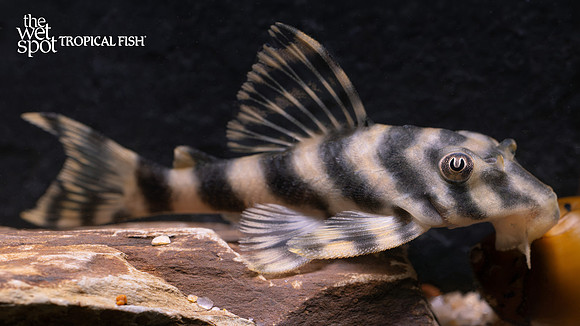
At a glance: Saddle pleco care
Compiled reference information. Review the care notes and original sources below.
What temperature is listed for Saddle pleco?
The compiled profile lists 24.0–28.0 °C for Saddle pleco (Peckoltia vittata). Check the original sources below for context and differing recommendations.
What tank size is listed for Saddle pleco?
The profile lists a minimum tank volume of 32.0 US gallons (120.0 liters). Volume alone does not establish suitability; consider dimensions, group size and other inhabitants alongside the full care notes.
What pH is listed for Saddle pleco?
The compiled profile lists a pH of 6.0–7.5. Review the cited care sources alongside the other water parameters in this profile.
Natural habitat
Peckoltia vittata is native to soft, sandy, or gravel-bottomed waters in South America. They thrive in environments where the water flow is gentle, and the pH is maintained between 6 to 7.5, which mimics their natural habitat and promotes their health in a home aquarium.
Where they are found
This species is primarily found in various freshwater systems across South America. Their preferred habitats include slow-moving rivers and streams where they can hide among rocks and vegetation, allowing them to evade predators while grazing on biofilm and detritus.
Aquarium care
When setting up an aquarium for Peckoltia vittata, ensure that the tank has a minimum volume of 120 liters (32 US gallons) and that it is well-filtered to maintain good water quality. The substrate should be fine sand or smooth gravel to protect their delicate barbels, and regular water changes are essential to keep ammonia and nitrate levels low. It's vital to monitor water parameters closely since fluctuations can stress the fish.
Feeding
Feed Peckoltia vittata sinking wafers, tablets, and frozen foods that sink to the bottom, such as bloodworms. They are nocturnal feeders, so providing food after the lights are turned off often encourages them to forage naturally. It's important to feed small amounts once or twice a day and remove uneaten food to prevent water quality issues.
Compatibility
Peckoltia vittata is generally peaceful and suitable for community tanks. They can cohabit with other non-aggressive species; however, males may be territorial toward each other. Caution should be taken to avoid mixing them with known aggressive species like Oscars, Betta males, and Pea Puffers, which can harm or outcompete them for resources.
Breeding
Peckoltia vittata is an egg-laying species, requiring specific conditions to breed successfully. A breeding tank is recommended, where males can defend a territory and females can deposit eggs in crevices or on flat surfaces. Maintaining optimal water conditions and diet during breeding season can encourage spawning.
Sources
Compiled from multiple independent care sheets — not copied from a single site.