Catalog / fish / Rummy-nose tetra
fish · Characidae
Rummy-nose tetra
Hemigrammus rhodostomus
Wild range: Amazon Basin (South America)
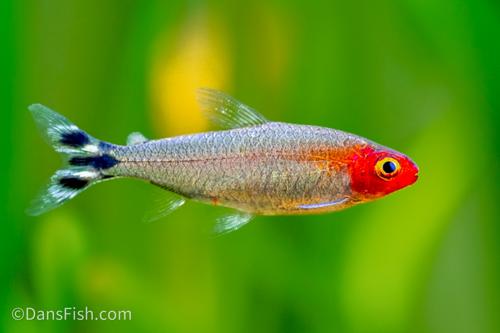
At a glance: Rummy-nose tetra care
Compiled reference information. Review the care notes and original sources below.
What temperature is listed for Rummy-nose tetra?
The compiled profile lists 18.0–29.0 °C for Rummy-nose tetra (Hemigrammus rhodostomus). Check the original sources below for context and differing recommendations.
What tank size is listed for Rummy-nose tetra?
The profile lists a minimum tank volume of 15.0 US gallons (60.0 liters). Volume alone does not establish suitability; consider dimensions, group size and other inhabitants alongside the full care notes.
What pH is listed for Rummy-nose tetra?
The compiled profile lists a pH of 5.5–7.5. Review the cited care sources alongside the other water parameters in this profile.
Natural habitat
Rummy Nose Tetras originate from the blackwater regions of the Rio Orinoco in Venezuela and the lower Amazon Basin in Brazil. They thrive in soft, acidic waters rich in humic acids from decomposing leaf litter, with habitats featuring rocks, caves, and dense vegetation that provide ample shading and food sources.
Where they are found
Often found in groups, these fish have a strong schooling behavior. Their schooling nature and peaceful temperament make them excellent additions to community tanks with similar sized and temperamented species.
Aquarium care
Regular testing and maintenance are essential for Rummy Nose Tetras as they are sensitive to water parameters like pH and hardness. A well-cycled tank with a soft substrate and plenty of swimming space is ideal. Weekly water changes are recommended to prevent stress and ensure a stable environment.
Feeding
A balanced diet should include high-quality flakes or pellets, supplemented with occasional treats such as bloodworms, daphnia, and finely chopped green vegetables to cater to their omnivorous diet and enhance their overall health.
Compatibility
Rummy Nose Tetras are peaceful and best housed with other small, non-aggressive fish. They typically coexist well with Danios, Rasboras, and other Tetra species, while avoiding cichlids or aggressive fish that may stress them.
Breeding
Breeding Rummy nose tetras can be done in a separate breeding tank with soft, slightly acidic water. They are egg scatterers, laying their eggs among fine-leaved plants or spawning mops. Eggs typically hatch within 24 to 36 hours, and fry should be fed infusoria until they can accept larger foods.
Sources
Compiled from multiple independent care sheets — not copied from a single site.