Catalog / fish / Royal whiptail
fish · Loricariidae
Royal whiptail
Sturisoma panamense
Wild range: Central and South America (South America)
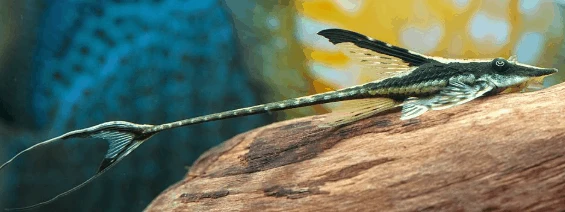
At a glance: Royal whiptail care
Compiled reference information. Review the care notes and original sources below.
What temperature is listed for Royal whiptail?
The compiled profile lists 20.0–28.0 °C for Royal whiptail (Sturisoma panamense). Check the original sources below for context and differing recommendations.
What tank size is listed for Royal whiptail?
The profile lists a minimum tank volume of 29.0 US gallons (110.0 liters). Volume alone does not establish suitability; consider dimensions, group size and other inhabitants alongside the full care notes.
What pH is listed for Royal whiptail?
The compiled profile lists a pH of 6.5–7.5. Review the cited care sources alongside the other water parameters in this profile.
Natural habitat
Royal Farlowella Catfish are native to clear, fast-flowing rivers with cool temperatures and plenty of solid substrates, primarily found in Central and South America. They thrive in well-oxygenated environments, indicative of their natural habitat's high-flow conditions.
Where they are found
While specific countries are not detailed, the species is known to be distributed across freshwater systems in South America, primarily in areas with gentle water flow and ample vegetation.
Aquarium care
To keep the Royal Whiptail Catfish healthy, it is essential to maintain good water quality with efficient aeration and filtration. An aquarium that replicates their natural environment, enriched with driftwood and rock formations, helps them exhibit natural behaviors. Regular partial water changes and a balanced diet are crucial for their well-being.
Feeding
Their diet primarily consists of algae, biofilm, and vegetable matter. To ensure proper health, they should be offered algae wafers, sinking catfish pellets, and a variety of greens daily. It's essential to place food in accessible locations as they may struggle to reach it otherwise.
Compatibility
Royal Whiptail Catfish are generally peaceful and can coexist with other non-aggressive fish species. Caution is advised with midwater fish that may compete for food, and tank mates should be chosen to minimize potential conflicts over grazing areas.
Breeding
Breeding this species can be achieved in a well-maintained aquarium. Males develop distinct features as they mature, which can aid in identifying them for breeding purposes. Spawning occurs on smooth surfaces, and males will guard the fertilized eggs until they hatch, typically within a week.
Sources
Compiled from multiple independent care sheets — not copied from a single site.