Catalog / plants / Whorled rotala
plant · Lythraceae
Whorled rotala
Rotala wallichii
Wild range: Southeast Asia (Asia)
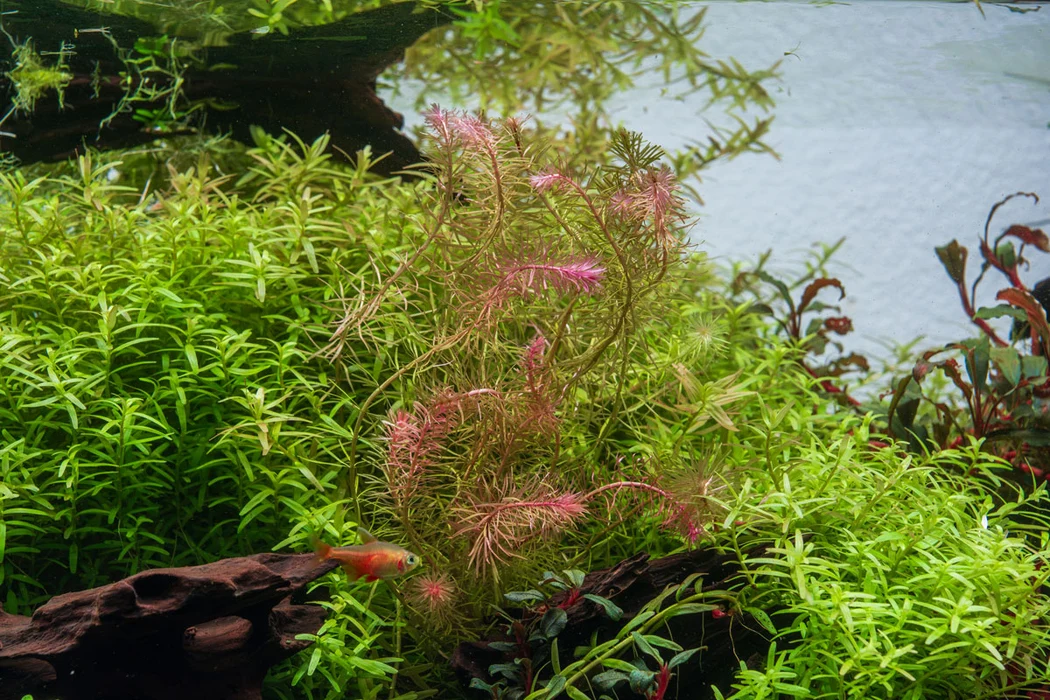
At a glance: Whorled rotala care
Compiled reference information. Review the care notes and original sources below.
What temperature is listed for Whorled rotala?
The compiled profile lists 20.0–28.0 °C for Whorled rotala (Rotala wallichii). Check the original sources below for context and differing recommendations.
What tank size is listed for Whorled rotala?
The profile lists a minimum tank volume of 4.0 US gallons (15.0 liters). Volume alone does not establish suitability; consider dimensions, group size and other inhabitants alongside the full care notes.
What pH is listed for Whorled rotala?
The compiled profile lists a pH of 5.5–7.5. Review the cited care sources alongside the other water parameters in this profile.
Natural habitat
Rotala wallichii thrives in soft to moderately hard freshwater with clear water and high lighting. It requires stable environmental conditions for optimal growth and coloration, particularly CO₂ supplementation to enhance its vivid pinkish-red tips.
Where they are found
This species is prevalent in Southeast Asia, particularly in shallow waters of freshwater rivers and streams, where nutrients are abundant and water conditions support its growth.
Aquarium care
For optimal growth, Rotala wallichii requires high lighting and carbon dioxide injection. Regular pruning promotes bushier growth and density. Ensure that the water flow remains moderate to support its delicate leaf structure.
Feeding
This plant does not require feeding in the traditional sense but benefits from micronutrient-rich fertilizers, particularly iron, which enhances its color.
Compatibility
Rotala wallichii is compatible with a variety of fish and invertebrates typically kept in community aquariums. However, be mindful of any species that may uproot or eat delicate plants.
Breeding
Propagation of Rotala wallichii is primarily through vegetative cuttings. Trim healthy stems above a node and replant them into the substrate to encourage new growth.
Sources
Compiled from multiple independent care sheets — not copied from a single site.