Catalog / plants / Round-leaf rotala
plant · Lythraceae
Round-leaf rotala
Rotala rotundifolia
Wild range: Southeast Asia (Asia)
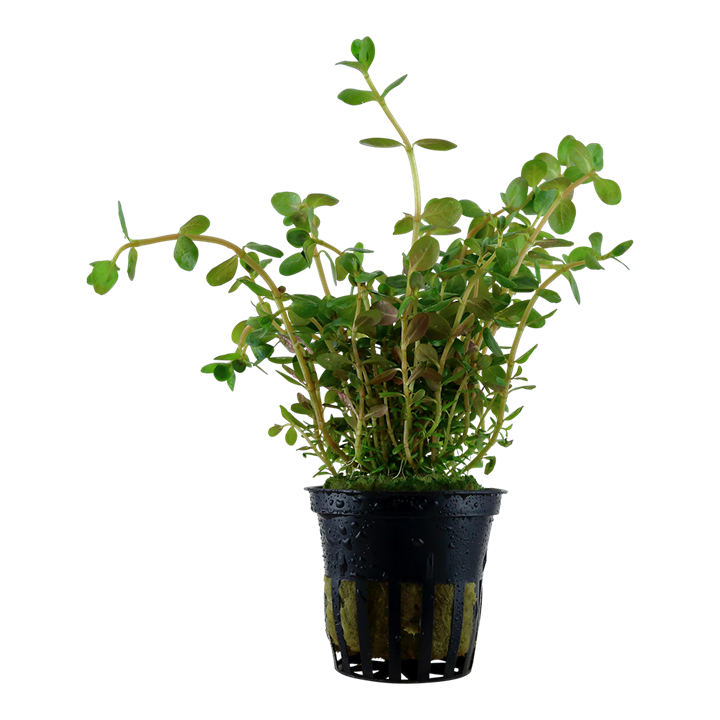
At a glance: Round-leaf rotala care
Compiled reference information. Review the care notes and original sources below.
What temperature is listed for Round-leaf rotala?
The compiled profile lists 4.0–32.0 °C for Round-leaf rotala (Rotala rotundifolia). Check the original sources below for context and differing recommendations.
What tank size is listed for Round-leaf rotala?
The profile lists a minimum tank volume of 5.0 US gallons (20.0 liters). Volume alone does not establish suitability; consider dimensions, group size and other inhabitants alongside the full care notes.
What pH is listed for Round-leaf rotala?
The compiled profile lists a pH of 4.0–8.0. Review the cited care sources alongside the other water parameters in this profile.
Natural habitat
Rotala rotundifolia thrives in freshwater environments, often found in tropical and subtropical regions of Southeast Asia. Its habitat typically includes shallow waters of rivers, ponds, and wetlands where it can grow both submersed and emergent. The plant requires high light levels and rich nutrient availability to flourish.
Where they are found
This species is distributed widely across Asia, particularly in subtropical and tropical regions, often found at altitudes up to 2700 meters. Its presence has also extended to the Southern US due to contamination in imported rice seeds.
Aquarium care
To care for Rotala rotundifolia, maintain medium to high lighting for at least eight hours a day, ensure a nutrient-rich substrate, and consider using CO2 supplementation for optimal growth and color.
Feeding
Rotala rotundifolia benefits from liquid fertilizers or root tabs to meet its nutritional needs, especially in aquariums lacking a nutrient substrate. A balanced approach ensuring the right light and CO2 levels will greatly enhance its health and vitality.
Compatibility
Rotala rotundifolia is safe for community tanks, coexisting well with various fish, shrimp, and snails, providing natural grazing opportunities on its leaves.
Breeding
Propagation is straightforward through cuttings. Lateral or top shoots can be replanted in the substrate, encouraging bushy growth.
Sources
Compiled from multiple independent care sheets — not copied from a single site.