Catalog / plants / Giant red rotala
plant
Giant red rotala
Rotala macrandra
Wild range: South Asia (Asia)
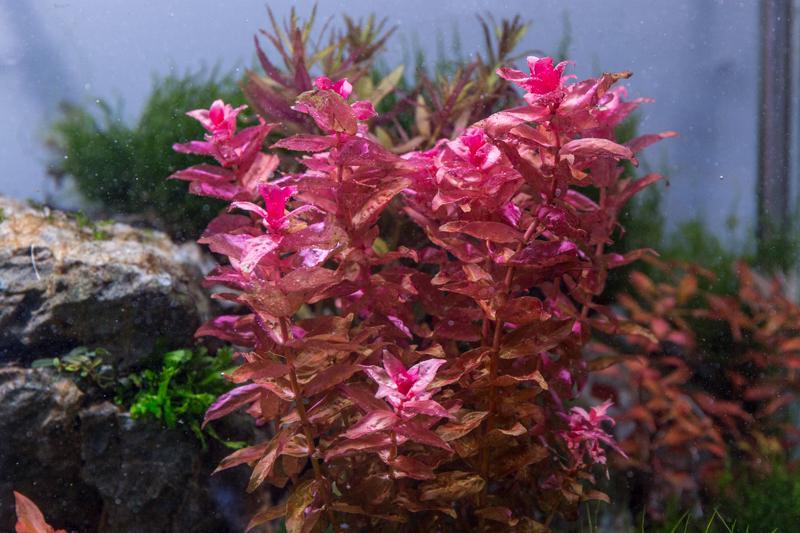
At a glance: Giant red rotala care
Compiled reference information. Review the care notes and original sources below.
What temperature is listed for Giant red rotala?
The compiled profile lists 22.0–28.0 °C for Giant red rotala (Rotala macrandra). Check the original sources below for context and differing recommendations.
What tank size is listed for Giant red rotala?
The profile lists a minimum tank volume of 10.0 US gallons (40.0 liters). Volume alone does not establish suitability; consider dimensions, group size and other inhabitants alongside the full care notes.
What pH is listed for Giant red rotala?
The compiled profile lists a pH of 4.5–7.5. Review the cited care sources alongside the other water parameters in this profile.
Natural habitat
Rotala macrandra is native to South Asia, particularly found in India. It thrives in soft, nutrient-rich waters, often in lakes, swamps, and slow-moving rivers. The habitat features varied conditions suitable for its growth, such as rich substrate and consistent water quality.
Where they are found
This species is indigenous to India and is often found in wetlands where water conditions fluctuate seasonally. It prefers areas with minimal disturbance and stable water chemistry.
Aquarium care
To ensure optimal growth, Rotala macrandra requires a tank setup with strong lighting and consistent CO2 injection. Regular pruning is recommended to maintain attractive bushy shapes and promote new growth.
Feeding
The plant benefits from regular fertilization, including both micro and macronutrients. An enriched soil can help provide necessary nutrients, while water column fertilization should be managed to avoid spikes in nitrates that may cause stress or stunting.
Compatibility
This plant is generally community-safe and can coexist with a variety of non-aggressive freshwater fish and invertebrates. However, it may require space to grow optimally and prevent overshadowing other plants.
Breeding
Propagation occurs through cuttings. Trim healthy stems and replant them in the substrate. Ensure adequate light and nutrient supply to encourage root establishment.
Sources
Compiled from multiple independent care sheets — not copied from a single site.