fish · Cyprinidae
Rosy barb
Pethia conchonius
Wild range: South Asia (Asia)
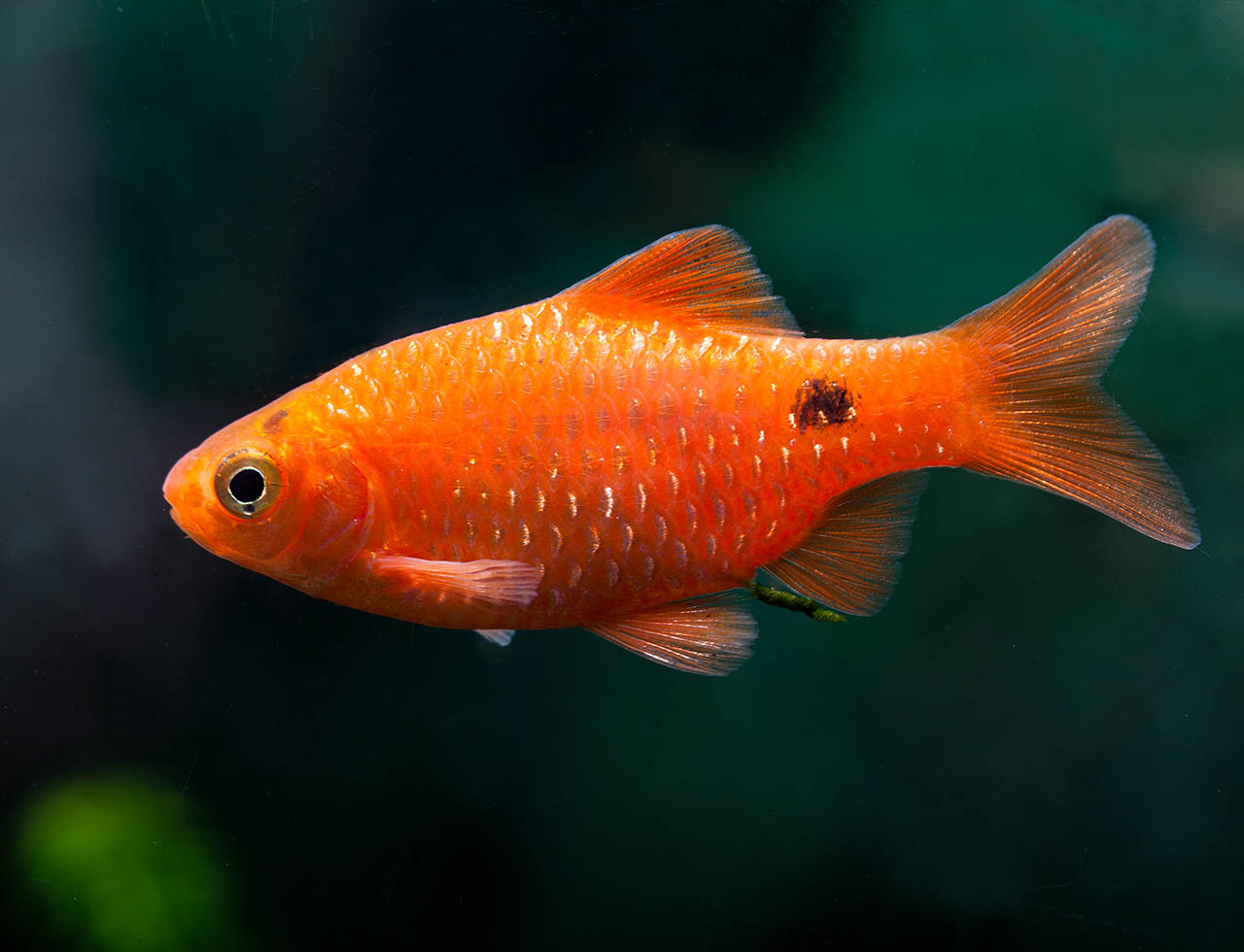
At a glance: Rosy barb care
Compiled reference information. Review the care notes and original sources below.
What temperature is listed for Rosy barb?
The compiled profile lists 18.0–27.0 °C for Rosy barb (Pethia conchonius). Check the original sources below for context and differing recommendations.
What tank size is listed for Rosy barb?
The profile lists a minimum tank volume of 21.1 US gallons (80.0 liters). Volume alone does not establish suitability; consider dimensions, group size and other inhabitants alongside the full care notes.
What pH is listed for Rosy barb?
The compiled profile lists a pH of 6.0–8.0. Review the cited care sources alongside the other water parameters in this profile.
Natural habitat
The rosy barb prefers well-oxygenated waters often found in fast-flowing streams and rivers, typically near rocky substrates among dense vegetation. This species thrives in environments characterized by high currents and rich aquatic plant life.
Where they are found
Introduced populations have been noted in regions like Singapore, Australia, Mexico, and Puerto Rico, alongside their native habitats in South Asia.
Aquarium care
In the aquarium, Rosy Barbs prefer a well-planted tank with open swimming space. They are not overly picky about water conditions but do best in slightly acidic to neutral pH. Providing moderate water flow can help mimic their natural habitats.
Feeding
Rosy barbs are omnivorous and should be fed a balanced diet of dry pellets, flakes, and occasional frozen foods. Feeding should be varied to prevent nutritional deficiencies, with small amounts served multiple times a day to enhance water quality and prevent uneaten food from decomposing.
Compatibility
Rosy Barbs are generally peaceful and do well in community tanks with similar-sized fish. However, they can be nippy and may uproot delicate plants, making them less suitable for heavily planted aquascapes.
Breeding
Breeding is fairly straightforward if conditions are optimal. Approach breeding with separate tanks for males and females. Provide adequate hiding spots for the fries, as adult fish exhibit little parental care.
Sources
Compiled from multiple independent care sheets — not copied from a single site.