Catalog / fish / Ringlet danio
fish · Cyprinidae
Ringlet danio
Danio tinwini
Wild range: Southeast Asia (Asia)
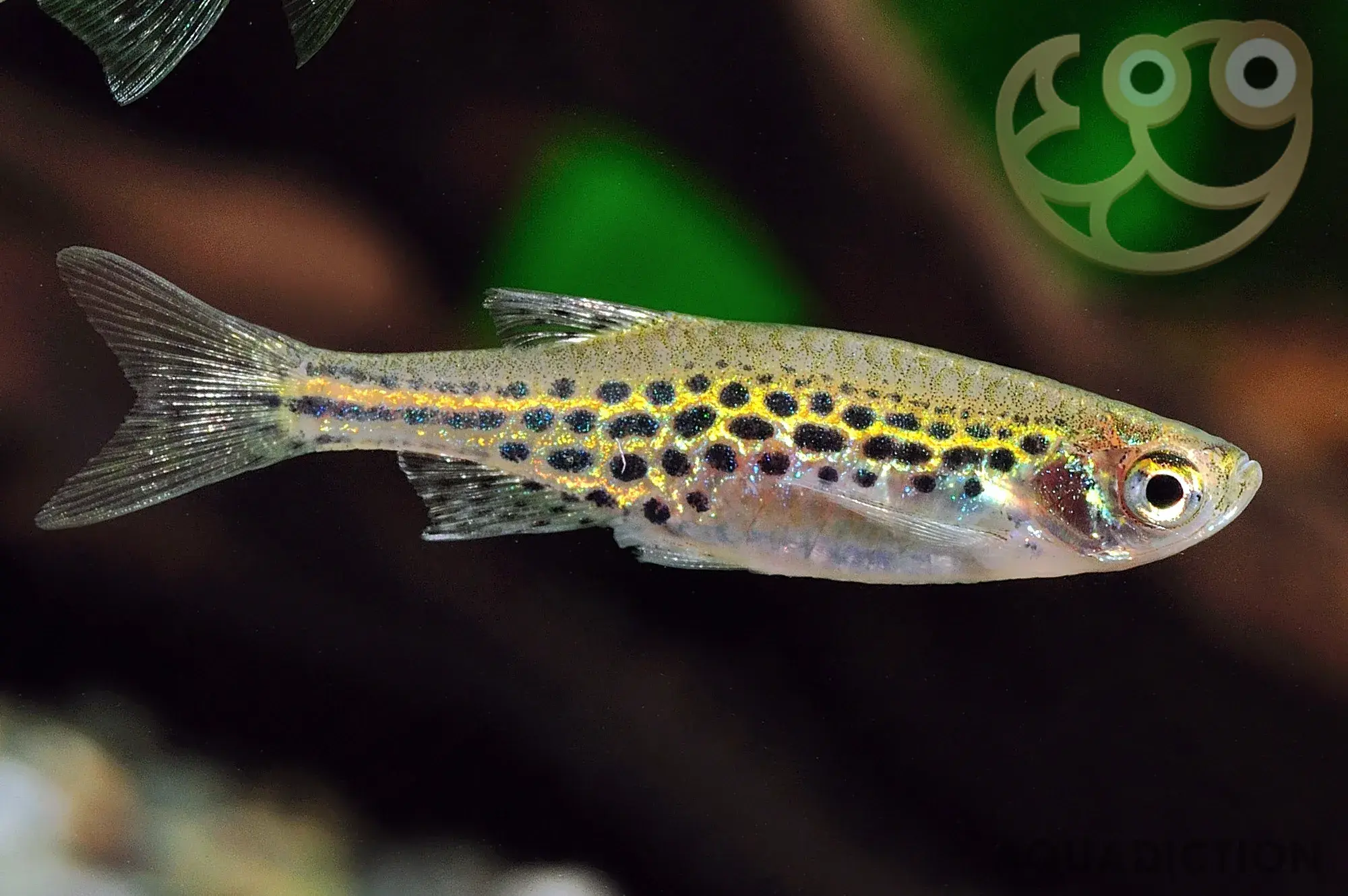
At a glance: Ringlet danio care
Compiled reference information. Review the care notes and original sources below.
What temperature is listed for Ringlet danio?
The compiled profile lists 18.0–26.0 °C for Ringlet danio (Danio tinwini). Check the original sources below for context and differing recommendations.
What tank size is listed for Ringlet danio?
The profile lists a minimum tank volume of 10.0 US gallons (37.9 liters). Volume alone does not establish suitability; consider dimensions, group size and other inhabitants alongside the full care notes.
What pH is listed for Ringlet danio?
The compiled profile lists a pH of 6.5–7.5. Review the cited care sources alongside the other water parameters in this profile.
Natural habitat
The Gold Ring Danio thrives in clean, well-oxygenated freshwater streams and rivers in Myanmar, characterized by gentle currents. This species requires a habitat that mimics its natural environment with plenty of vegetation for cover and a slightly dark substrate to enhance its vibrant colors.
Where they are found
Native to Myanmar, this species is typically found in semi-tropical waters, which influence their temperament and social behavior when introduced to aquarium settings.
Aquarium care
Gold Ring Danios are ideal for beginners due to their hardiness and adaptability to a wide range of water conditions. It's vital to maintain a stable environment with clean water and ample space for swimming. Regular water changes and a good filtration system are recommended.
Feeding
Gold Ring Danios should be fed a varied diet to stay healthy. They will thrive on high-quality flakes, pellets, and a mix of live or frozen foods such as brine shrimp, daphnia, and bloodworms, providing the necessary nutrients for their well-being.
Compatibility
These fish are peaceful and do well in community tanks with other similar-sized, non-aggressive species. They can sometimes interact positively with different species, making them excellent tank mates for tranquil environments.
Breeding
Breeding is relatively straightforward; set up a separate breeding tank with spawning mops. The female will scatter eggs among the mops which should be removed after spawning to prevent the parents from eating them.
Sources
Compiled from multiple independent care sheets — not copied from a single site.