Catalog / fish / Red zebra cichlid
fish · Cichlidae
Red zebra cichlid
Maylandia estherae
Wild range: Lake Malawi (Africa)
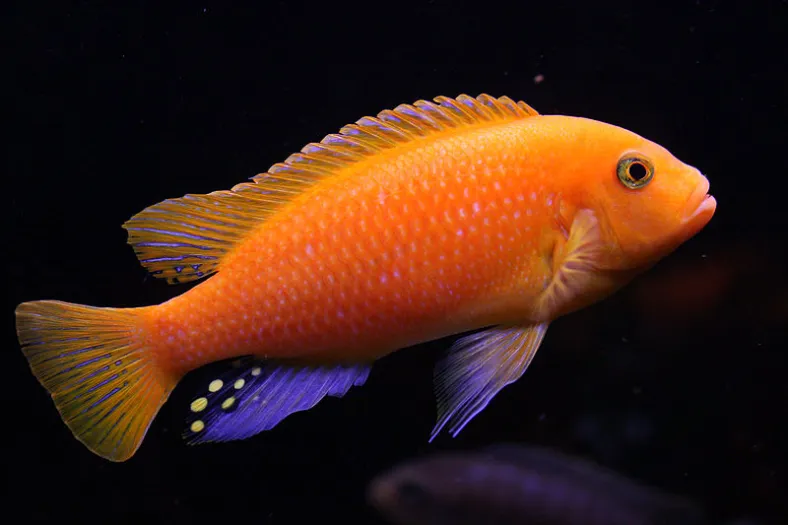
At a glance: Red zebra cichlid care
Compiled reference information. Review the care notes and original sources below.
What temperature is listed for Red zebra cichlid?
The compiled profile lists 24.0–28.9 °C for Red zebra cichlid (Maylandia estherae). Check the original sources below for context and differing recommendations.
What tank size is listed for Red zebra cichlid?
The profile lists a minimum tank volume of 50.0 US gallons (189.3 liters). Volume alone does not establish suitability; consider dimensions, group size and other inhabitants alongside the full care notes.
What pH is listed for Red zebra cichlid?
The compiled profile lists a pH of 7.5–8.6. Review the cited care sources alongside the other water parameters in this profile.
Natural habitat
Red zebra cichlids inhabit the rocky shorelines of Lake Malawi, thriving in shallow, warm waters rich in caves and crevices, providing ample hiding spots and territories.
Where they are found
As an endemic species to Lake Malawi, this cichlid thrives amongst the unique geological and ecological features of the lake, which offer both shelter and food sources.
Aquarium care
To create an ideal habitat for Red Zebras, replicate their native rocky environments with plenty of hiding spaces using smooth pebbles. A tank size of 50-75 gallons is recommended to accommodate their growth and territorial nature. Regular water changes and maintaining stable parameters are essential for their health.
Feeding
In captivity, red zebra cichlids thrive on a diet rich in spirulina, algae wares, and blanched vegetables such as zucchini or spinach. High-protein foods should be avoided to prevent digestive issues.
Compatibility
While semi-aggressive, Red Zebras can coexist with other species like Synodontis catfish and fellow Red Zebras. It's crucial to avoid overly aggressive tankmates that may disrupt their established territories.
Breeding
Breeding occurs through mouthbrooding, where females carry the fertilized eggs in their mouths until they hatch. Providing plenty of hiding spots helps in facilitating breeding behavior.
Sources
Compiled from multiple independent care sheets — not copied from a single site.