Catalog / fish / Red-tailed black shark
fish · Cyprinidae
Red-tailed black shark
Epalzeorhynchos bicolor
Wild range: Southeast Asia (Asia)
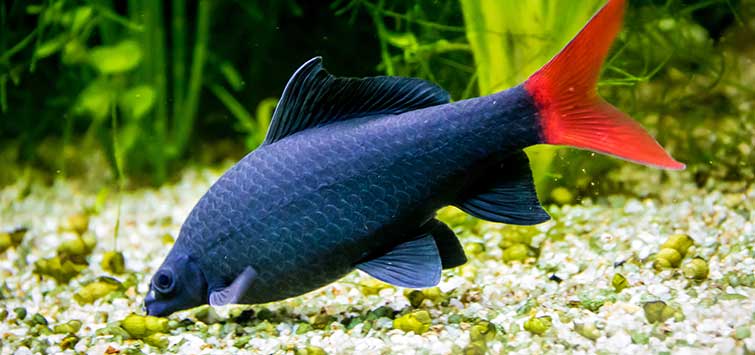
At a glance: Red-tailed black shark care
Compiled reference information. Review the care notes and original sources below.
What temperature is listed for Red-tailed black shark?
The compiled profile lists 22.0–27.0 °C for Red-tailed black shark (Epalzeorhynchos bicolor). Check the original sources below for context and differing recommendations.
What tank size is listed for Red-tailed black shark?
The profile lists a minimum tank volume of 52.8 US gallons (200.0 liters). Volume alone does not establish suitability; consider dimensions, group size and other inhabitants alongside the full care notes.
What pH is listed for Red-tailed black shark?
The compiled profile lists a pH of 6.5–7.5. Review the cited care sources alongside the other water parameters in this profile.
Natural habitat
The Red Tail Shark is endemic to the clear, fast-moving rivers and lakes of central Thailand, primarily in the Chao Phraya basin. They thrive in well-oxygenated waters, requiring stable conditions to support their territorial and semi-aggressive nature.
Where they are found
In the wild, Red-Tailed Sharks face serious threats due to habitat loss and pollution, leading to their classification as critically endangered. Most specimens available in the aquarium trade are now captive-bred.
Aquarium care
To ensure optimal care for the red tail shark, keep a minimum tank size of 55 gallons (208.2 L) with moderate to high water flow and good oxygenation. Provide plenty of hiding places with smooth rocks and driftwood to accommodate their territorial behavior. It's essential to have a well-maintained environment that mimics their natural habitat with suitable substrate and decor.
Feeding
Red Tail Sharks are true omnivores, enjoying a varied diet of sinking pellets, veggie wafers, and occasional frozen foods like bloodworms and brine shrimp. Regular offerings of blanched vegetables enhance their nutritional intake and support digestion.
Compatibility
Red tail sharks are semi-aggressive and do best with larger, more robust tank mates such as bala sharks, gouramis, and angelfish. It's important to avoid housing them with more aggressive species or those that resemble them, as this can lead to increased territorial behavior and stress. Ideally, only one red tail shark per aquarium is recommended unless you have a significantly sized tank with ample hiding spots.
Breeding
Breeding Red-Tailed Sharks is challenging and is quite rare in home aquariums due to specific environmental and behavioral requirements that are hard to replicate in captivity.
Sources
Compiled from multiple independent care sheets — not copied from a single site.