Catalog / invertebrates / Red swamp crayfish
invertebrate · Cambaridae
Red swamp crayfish
Procambarus clarkii
Wild range: Gulf coastal plain (North America)
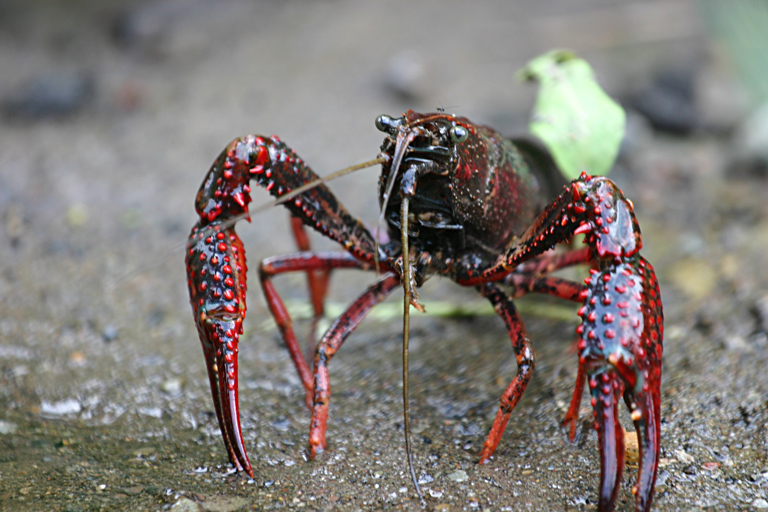
At a glance: Red swamp crayfish care
Compiled reference information. Review the care notes and original sources below.
What temperature is listed for Red swamp crayfish?
The compiled profile lists 15.0–30.0 °C for Red swamp crayfish (Procambarus clarkii). Check the original sources below for context and differing recommendations.
What tank size is listed for Red swamp crayfish?
The profile lists a minimum tank volume of 21.0 US gallons (80.0 liters). Volume alone does not establish suitability; consider dimensions, group size and other inhabitants alongside the full care notes.
What pH is listed for Red swamp crayfish?
The compiled profile lists a pH of 6.5–8.5. Review the cited care sources alongside the other water parameters in this profile.
Natural habitat
Red Swamp Crayfish are found abundantly in a variety of freshwater habitats, including ponds, swamps, and sluggish streams. They prefer areas with muddy or sandy substrates rich in organic debris, and they have the remarkable ability to tolerate brackish water, making them adaptable to various environments.
Where they are found
This species is widely distributed in the Gulf of Mexico region, with a native range in the Mississippi River basin. It can also be found in man-made aquatic habitats.
Aquarium care
This species is ideal for beginners due to its hardiness. Ensure plenty of hiding spots with rocks or caves, and maintain a clean tank with good filtration. Regular water changes will help maintain suitable water quality and temperature.
Feeding
As omnivores, Red Swamp Crayfish feed on a variety of food including aquatic plants, snails, insects, and fish. It is crucial to provide a balanced diet with both plant and protein sources to maintain their health.
Compatibility
Due to their aggressive behavior, it is best to keep Blue Claw Crayfish in a species-only tank. They may attack smaller fish or other invertebrates, so tank mates should be chosen carefully, preferably larger species that can coexist peacefully.
Breeding
Breeding occurs in water temperatures above 20°C and facilitates egg-laying in sheltered environments. Females carry fertilized eggs under their tails until they hatch into small, post-larval crayfish.
Sources
Compiled from multiple independent care sheets — not copied from a single site.