Catalog / fish / Red rainbowfish
fish
Red rainbowfish
Glossolepis incisus
Wild range: New Guinea (Australia)
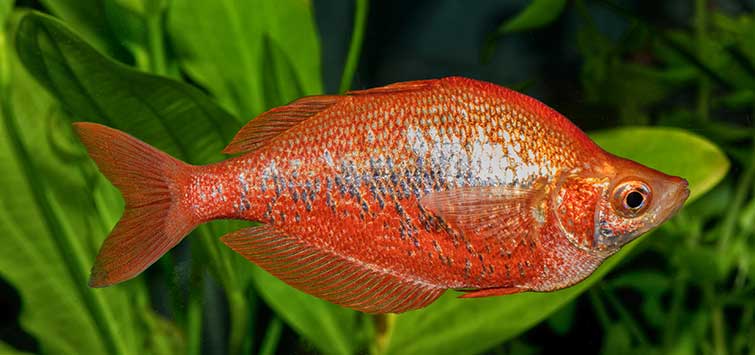
At a glance: Red rainbowfish care
Compiled reference information. Review the care notes and original sources below.
What temperature is listed for Red rainbowfish?
The compiled profile lists 22.0–28.0 °C for Red rainbowfish (Glossolepis incisus). Check the original sources below for context and differing recommendations.
What tank size is listed for Red rainbowfish?
The profile lists a minimum tank volume of 40.0 US gallons (150.0 liters). Volume alone does not establish suitability; consider dimensions, group size and other inhabitants alongside the full care notes.
What pH is listed for Red rainbowfish?
The compiled profile lists a pH of 6.0–8.0. Review the cited care sources alongside the other water parameters in this profile.
Natural habitat
The New Guinea Red Rainbow inhabits freshwater rivers and streams in New Guinea. These fishes are often found in clear waters with abundant vegetation, which provides both hiding spots and spawning areas. They thrive in environments where temperatures remain stable and water parameters stay within their preferred ranges.
Where they are found
This species is endemic to a specific region in Indonesia and is vulnerable due to its limited distribution.
Aquarium care
To successfully keep Glossolepis incisus, it's important to maintain stable water conditions and provide ample space for swimming. A well-planted, spacious aquarium of at least 150 liters is recommended, allowing for a school of 10 or more fish to exhibit their natural behaviors. Regular water changes will help keep the environment clean and vibrant, which is essential for their health and coloration.
Feeding
New Guinea Red Rainbows are omnivorous and accept a diet that includes high-quality flake food, frozen food like brine shrimp and daphnia, and other prepared meals. A varied diet will help enhance their color and overall well-being.
Compatibility
These fish are best kept in groups of 10 or more and should be housed with similarly sized peaceful species. They may display aggression if kept in smaller numbers, so providing a larger school is key to minimizing territorial disputes. They are generally safe with community tankmates, but smaller fish may be seen as prey due to their active nature and swimming level.
Breeding
For breeding, set up a dedicated tank with fine-leaved plants or spawning mops, and ensure the male is conditioned to display to the female. The eggs will hatch in 6-9 days, and fry should be fed infusoria initially.
Sources
Compiled from multiple independent care sheets — not copied from a single site.