Catalog / invertebrates / Red racer nerite
invertebrate · Neritidae
Red racer nerite
Vittina coromandeliana
Wild range: Pacific Islands (Oceania)
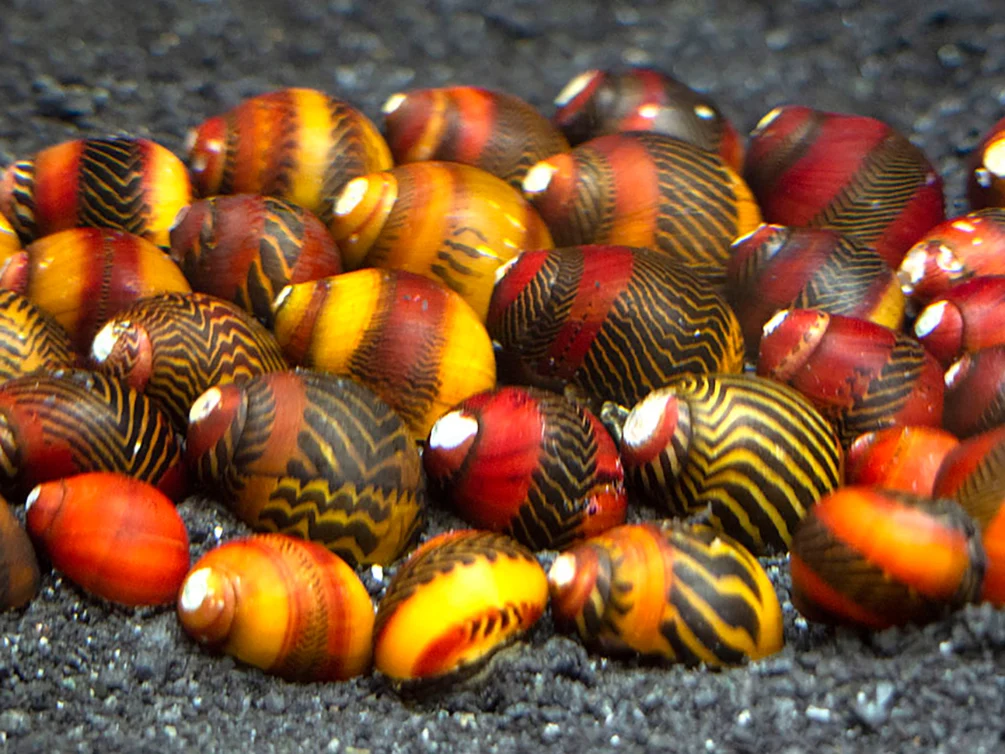
At a glance: Red racer nerite care
Compiled reference information. Review the care notes and original sources below.
What temperature is listed for Red racer nerite?
The compiled profile lists 22.0–28.0 °C for Red racer nerite (Vittina coromandeliana). Check the original sources below for context and differing recommendations.
What tank size is listed for Red racer nerite?
The profile lists a minimum tank volume of 3.0 US gallons (11.4 liters). Volume alone does not establish suitability; consider dimensions, group size and other inhabitants alongside the full care notes.
What pH is listed for Red racer nerite?
The compiled profile lists a pH of 6.2–8.2. Review the cited care sources alongside the other water parameters in this profile.
Natural habitat
Red Racer Nerite Snails thrive in stable freshwater environments with abundant grazing surfaces. They're particularly suited for planted aquariums where they can contribute to algae control without harming delicate plants.
Where they are found
This species thrives in areas with rich biofilm and algae growth, typical of mangrove swamps and estuary environments.
Aquarium care
To care for Red racer Nerite snails, ensure the aquarium is fully cycled and regularly checked for ammonia and nitrite levels. Maintain a stable pH above 7.0 to promote longevity, and supplement with calcium if needed. Keeping the tank slightly less clean encourages algae growth for feeding.
Feeding
While primarily feeding on algae, these snails appreciate supplemental foods like algae wafers, blanched vegetables such as zucchini and spinach, especially in cleaner tanks with limited algae.
Compatibility
They are suitable companions for peaceful tankmates, especially dwarf shrimp. Care should be taken to avoid aggressive fish species that may nip at their antennae. Overall, they are community-safe and enhance the biodiversity of a shrimp tank.
Breeding
Vittina coromandeliana lays capsule-like white eggs on hard surfaces in the aquarium; however, these eggs require brackish or marine conditions to hatch, thus won't lead to overpopulation in standard freshwater setups.
Sources
Compiled from multiple independent care sheets — not copied from a single site.