Catalog / fish / Red pair-spawning betta
fish · Osphronemidae
Red pair-spawning betta
Betta rutilans
Wild range: Southeast Asia (Asia)
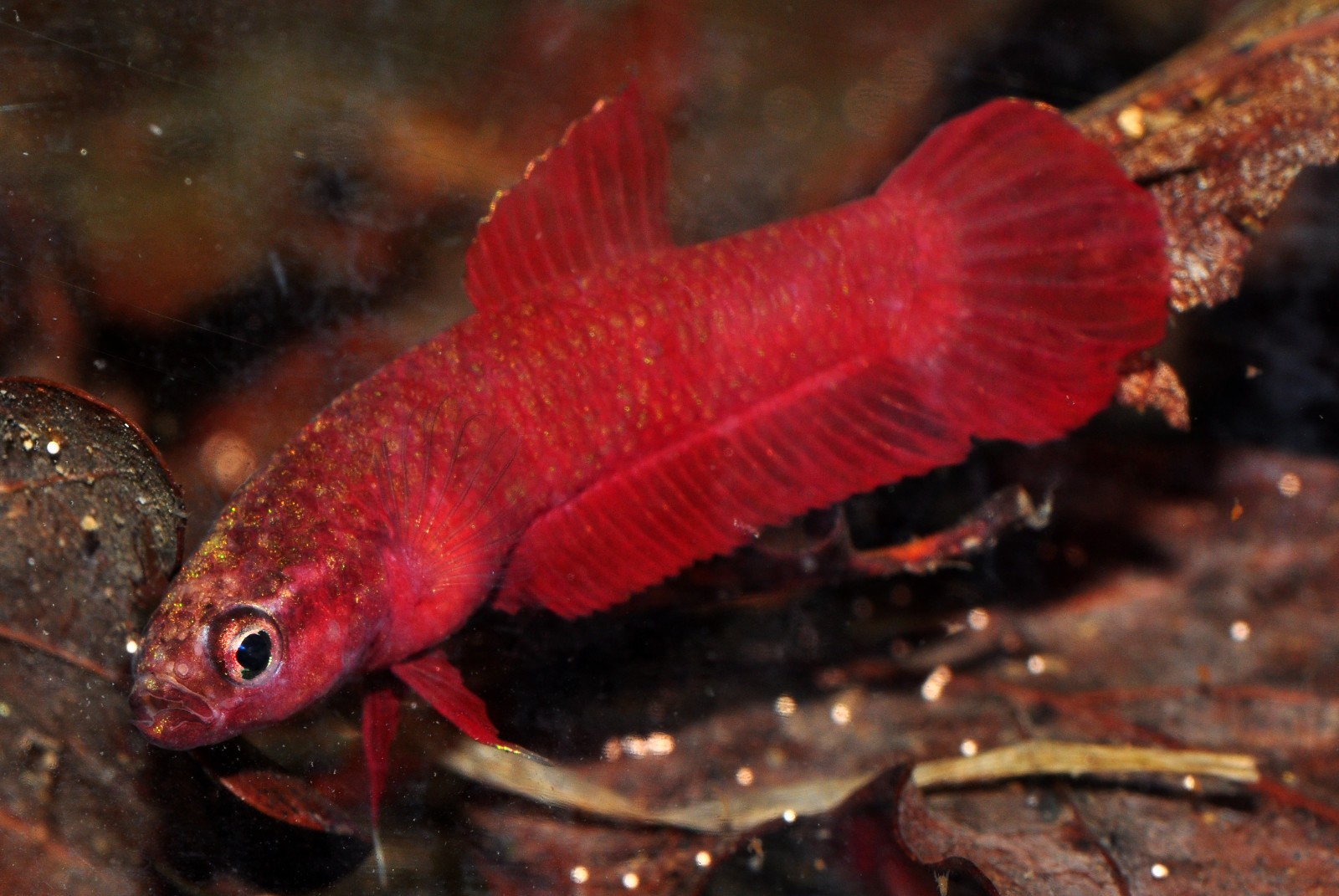
At a glance: Red pair-spawning betta care
Compiled reference information. Review the care notes and original sources below.
What temperature is listed for Red pair-spawning betta?
The compiled profile lists 24.0–30.0 °C for Red pair-spawning betta (Betta rutilans). Check the original sources below for context and differing recommendations.
What tank size is listed for Red pair-spawning betta?
The profile lists a minimum tank volume of 2.6 US gallons (10.0 liters). Volume alone does not establish suitability; consider dimensions, group size and other inhabitants alongside the full care notes.
What pH is listed for Red pair-spawning betta?
The compiled profile lists a pH of 6.0–7.5. Review the cited care sources alongside the other water parameters in this profile.
Natural habitat
Crowntail Bettas are predominantly found in slow-moving freshwater environments such as rice paddies, swamps, and shallow ponds, exhibiting a preference for warm waters rich in vegetation. Their natural habitat often boasts dense plant coverage which provides both hiding spots and spawning areas for breeding.
Where they are found
Bettas are native to Southeast Asia, primarily found in water bodies of Thailand, Cambodia, Vietnam, Laos, and Myanmar. A natural habitat characterized by slow-moving and shallow waters rich in aquatic plants is essential for their well-being.
Aquarium care
In captivity, Wild Bettas thrive in tanks that replicate their natural environments. A well-planted aquarium with ample hiding spots like PVC pipes or flower pot caves is ideal. Tanks should have clean, neutral water and be well-filtered, with a gentle water flow to mimic their natural habitat. Covering tanks is essential as these fish are known jumpers.
Feeding
Feed high-quality flakes or pellets specifically designed for Betta fish, complemented with occasional live or frozen foods such as brine shrimp or bloodworms. Maintain a balanced diet to ensure health and vitality.
Compatibility
Wild Bettas are best kept singly or in species-specific setups to avoid territorial disputes and stress. They can be semi-aggressive towards other fish, particularly during breeding conditions. Mixing species should be done cautiously, and tank mates should be chosen carefully to avoid aggression and stress. Large, peaceful fish are preferred if kept in community tanks.
Breeding
To breed Bettas, provide a breeding tank with a volume of 15–20 liters and a temperature of 27–28°C. Introduce the male first to encourage bubble nest building, then introduce the female. After spawning, remove the female to prevent aggression. The male will care for the eggs and fry until they swim freely, after which he should be removed to avoid predation.
Sources
Compiled from multiple independent care sheets — not copied from a single site.