Catalog / fish / Rainbow shark
fish · Cyprinidae
Rainbow shark
Epalzeorhynchos frenatum
Wild range: Southeast Asia (Asia)
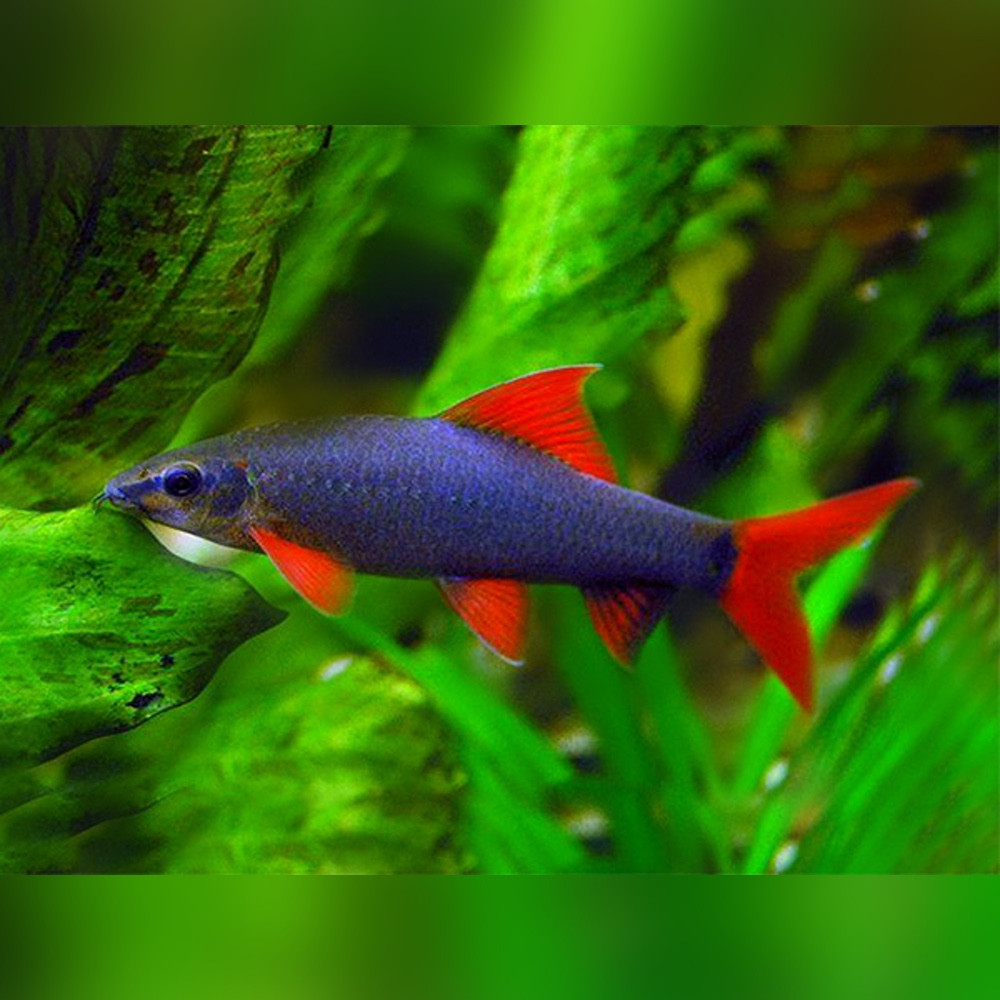
At a glance: Rainbow shark care
Compiled reference information. Review the care notes and original sources below.
What temperature is listed for Rainbow shark?
The compiled profile lists 22.0–28.0 °C for Rainbow shark (Epalzeorhynchos frenatum). Check the original sources below for context and differing recommendations.
What tank size is listed for Rainbow shark?
The profile lists a minimum tank volume of 55.0 US gallons (208.0 liters). Volume alone does not establish suitability; consider dimensions, group size and other inhabitants alongside the full care notes.
What pH is listed for Rainbow shark?
The compiled profile lists a pH of 6.5–8.0. Review the cited care sources alongside the other water parameters in this profile.
Natural habitat
Rainbow sharks are primarily found in fresh waters in rivers and streams of Southeast Asia, particularly in Thailand, Laos, Cambodia, and Vietnam. They prefer environments with moderate flow, rocky substrates, and plenty of hiding spots to reduce stress.
Where they are found
These fish are native to the freshwater systems of Southeast Asia, specifically in countries like Thailand, Malaysia, Cambodia, and Vietnam, where they are often found in flowing waters with ample cover from plants and rocks.
Aquarium care
In captivity, Rainbow Sharks require a spacious tank with hiding spots and plenty of swimming space due to their territorial nature. It is advisable to keep them in a tank of at least 55 gallons to accommodate their size and behavior.
Feeding
They are opportunistic feeders and will eat a variety of foods, including algae, flakes, pellets, and the occasional vegetable. Providing algae wafers can encourage foraging behavior, mimicking their natural feeding habits.
Compatibility
While they are often deemed community fish, Rainbow Sharks can be territorial, particularly toward their own species and similar fish such as other sharks. They are best kept with larger, non-aggressive tank mates to minimize aggression.
Breeding
Breeding Rainbow Sharks in captivity poses challenges, primarily due to their territorial nature. They are egg-layers, and breeding generally requires specific conditions and ample space to reduce aggression and promote a suitable environment for the fry.
Sources
Compiled from multiple independent care sheets — not copied from a single site.