Catalog / invertebrates / Quilted melania
invertebrate · Thiaridae
Quilted melania
Tarebia granifera
Wild range: Subtropical and tropical regions (Africa)
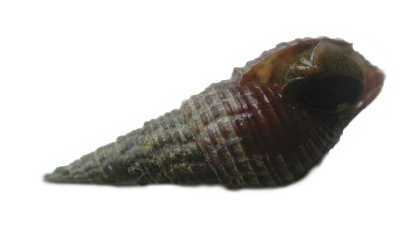
At a glance: Quilted melania care
Compiled reference information. Review the care notes and original sources below.
What temperature is listed for Quilted melania?
The compiled profile lists 15.6–40.0 °C for Quilted melania (Tarebia granifera). Check the original sources below for context and differing recommendations.
What tank size is listed for Quilted melania?
The profile lists a minimum tank volume of 2.6 US gallons (10.0 liters). Volume alone does not establish suitability; consider dimensions, group size and other inhabitants alongside the full care notes.
What pH is listed for Quilted melania?
The compiled profile lists a pH of 7.0–8.5. Review the cited care sources alongside the other water parameters in this profile.
Natural habitat
The red-rimmed melania thrives in quiet, shallow, eutrophic environments where it can find ample microalgae and detritus. Favoring turbid waters, this snail is nocturnal and often buries itself in mud or hides among decaying plants during the day. It can tolerate varying salinities and low dissolved oxygen levels, contributing to its ability to inhabit diverse freshwater ecosystems.
Where they are found
This species is native to Southeast Asia and Oceania but has become widespread due to introductions in various regions including the Caribbean and parts of North America, generally thriving in freshwater and estuarine environments.
Aquarium care
Practical guidance for keeping the species healthy in an aquarium setting, including tank size recommendations, water condition parameters, and other essential care tips.
Feeding
As generalist grazers, red-rimmed melania primarily feed on microalgae and detritus. They may even ingest other juvenile snails inadvertently while feeding, showcasing their role as important detritivores in aquatic environments.
Compatibility
Insights into which species this organism can cohabit with, detailing any potential aggressions or peaceful behaviors towards tank mates.
Breeding
This species reproduces primarily through parthenogenesis, with females carrying embryos in their brood pouch. The young hatch as small snails and are usually around 2 mm in length with several shell whorls.
Sources
Compiled from multiple independent care sheets — not copied from a single site.