Catalog / fish / Pygmy corydoras
fish · Callichthyidae
Pygmy corydoras
Corydoras pygmaeus
Wild range: Amazon Basin (South America)
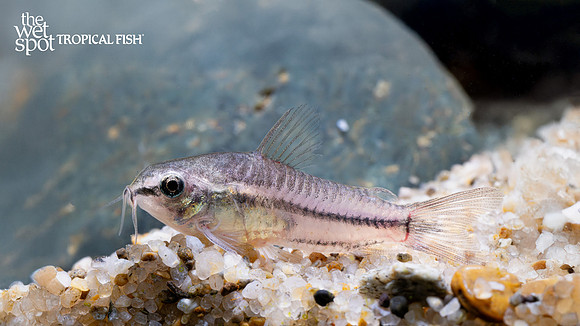
At a glance: Pygmy corydoras care
Compiled reference information. Review the care notes and original sources below.
What temperature is listed for Pygmy corydoras?
The compiled profile lists 22.0–28.0 °C for Pygmy corydoras (Corydoras pygmaeus). Check the original sources below for context and differing recommendations.
What tank size is listed for Pygmy corydoras?
The profile lists a minimum tank volume of 8.0 US gallons (30.0 liters). Volume alone does not establish suitability; consider dimensions, group size and other inhabitants alongside the full care notes.
What pH is listed for Pygmy corydoras?
The compiled profile lists a pH of 6.0–8.0. Review the cited care sources alongside the other water parameters in this profile.
Natural habitat
Pygmy Corydoras are native to the slow-moving rivers and streams of the Amazon Basin. They prefer habitats with dense vegetation and sandy substrates, which provide cover and foraging opportunities.
Where they are found
They prefer areas with gentle flow and abundant hiding spots provided by plants and substrate.
Aquarium care
Corydoras pygmaeus is adaptable and can thrive in a well-maintained aquarium with gentle flow and stable parameters. Soft substrates such as fine sand are essential to prevent damage to their delicate barbels. Regular water changes and a varied diet of high-quality flake, pellet, and frozen foods support their health and activity levels.
Feeding
Pygmy Corydoras are omnivorous scavengers; ideally, they should be fed a varied diet including high-quality flakes or pellets designed for bottom-dwelling fish, supplemented with live or frozen foods such as bloodworms or brine shrimp, and occasional vegetable matter like spirulina or algae wafers.
Compatibility
This species is a peaceful addition to community tanks and is compatible with small tetras, rasboras, and other non-aggressive fish. They can coexist with adult dwarf shrimp, but caution should be taken with very small shrimp fry, which may be seen as food.
Breeding
Breeding Pygmy Cories is facilitated in a dedicated tank with more males than females, ideally in a ratio of 2:1, and maintaining optimal pH and temperature.
Sources
Compiled from multiple independent care sheets — not copied from a single site.