Catalog / fish / Pink-tailed chalceus
fish · Exampleidae
Pink-tailed chalceus
Chalceus macrolepidotus
Wild range: Southeast Asia (Asia)
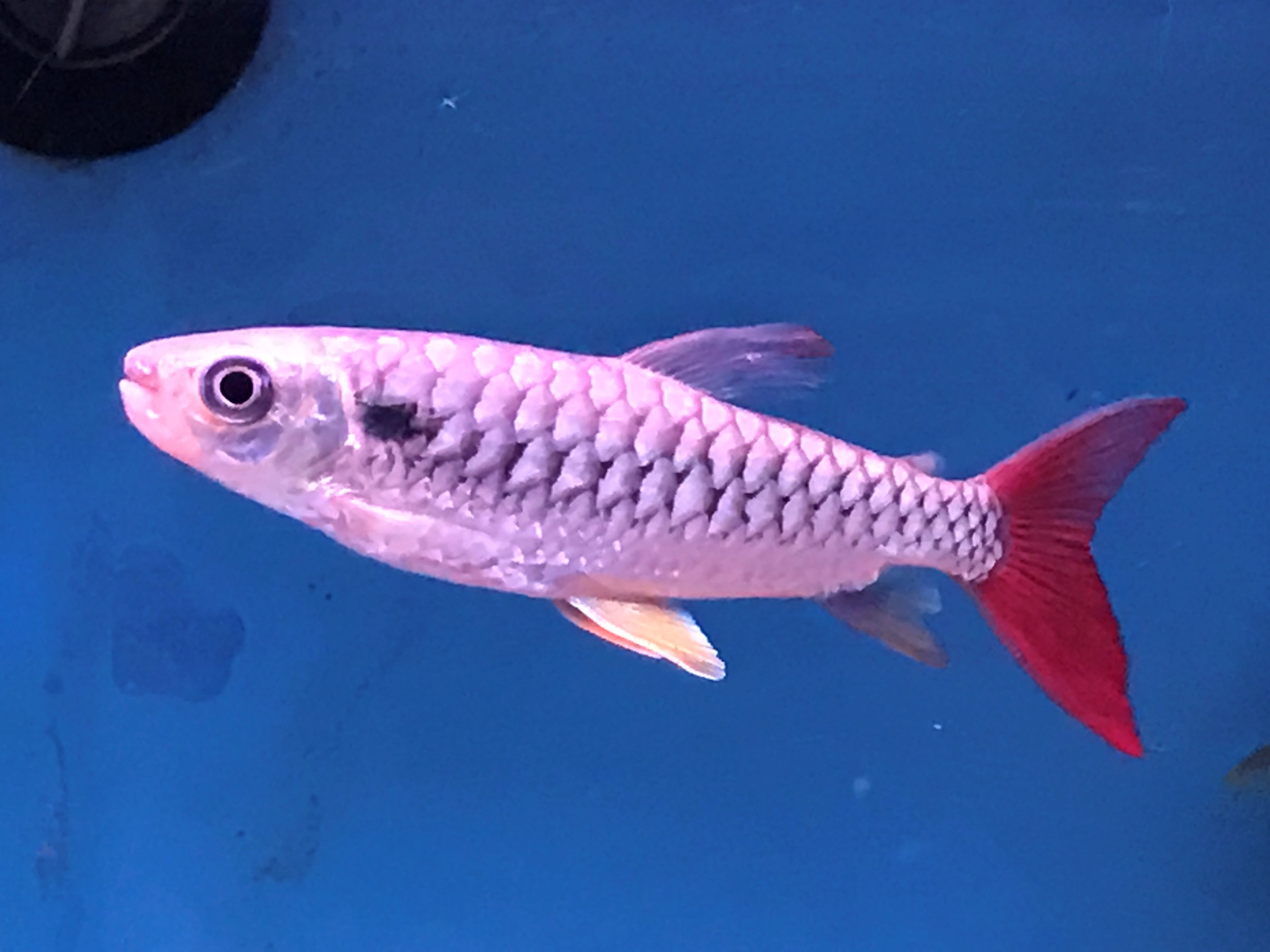
At a glance: Pink-tailed chalceus care
Compiled reference information. Review the care notes and original sources below.
What temperature is listed for Pink-tailed chalceus?
The compiled profile lists 22.0–28.0 °C for Pink-tailed chalceus (Chalceus macrolepidotus). Check the original sources below for context and differing recommendations.
What tank size is listed for Pink-tailed chalceus?
The profile lists a minimum tank volume of 26.4 US gallons (100.0 liters). Volume alone does not establish suitability; consider dimensions, group size and other inhabitants alongside the full care notes.
What pH is listed for Pink-tailed chalceus?
The compiled profile lists a pH of 6.5–7.5. Review the cited care sources alongside the other water parameters in this profile.
Natural habitat
This species is commonly found in rivers with gentle currents and plenty of vegetation. They thrive in well-planted aquascapes that mimic their natural habitat, providing hiding spots and breeding areas.
Where they are found
Originating from freshwater rivers and streams, this species prefers warm waters typical of tropical regions, where temperature and water quality are stable throughout the year.
Aquarium care
Caring for this fish involves maintaining clean water conditions with regular water changes. A varied diet consisting of both flakes and live foods will support their health and vibrancy. Plants should be trimmed regularly to prevent overgrowth.
Feeding
They are not picky eaters and enjoy a mix of high-quality flakes, sinking pellets, and occasional live or frozen foods. Feeding them twice a day will ensure they remain healthy.
Compatibility
This species is community-safe and can coexist with other peaceful or semi-aggressive species. Avoid aggressive tank mates that may stress or harm them.
Breeding
Breeding occurs in a well-planted tank where females lay eggs among the foliage. Provide a separate breeding tank to increase survival rates of the fry, and remove parents after spawning to avoid predation of the young.
Sources
Compiled from multiple independent care sheets — not copied from a single site.